

Her Majestys Revenue and Customs has announced two changes to the rules governing Landfill Tax in a move which has sent waves throughout the waste industry.
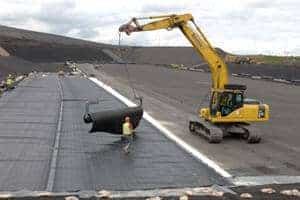
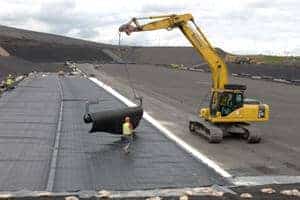
In a brief published on Friday (May 18), the HMRC said that tax should be paid on material used to protect or provide a suitable stable substrate for the overlying layers at the top of a landfill cell. Known as the top fluff layer, this is around a metre of material underneath the clay cap in each cell and in the past has been regarded as an engineering material and therefore not taxable.
In addition, fines from recycling processes, grit and screenings will no longer be eligible for the lower 2.50 rate of landfill tax applied to inert material, and must be charged the full rate of 64 a tonne.
The changes are set to have a big impact on the waste management sector, which has not previously had to shoulder landfill tax costs for this material, with some suggesting that it could push up the prices of recycling and disposal.
One landfill tax expert told letsrecycle.com: The bulletin is causing waves throughout the industry even since Friday, given the two fundamental issues being addressed – namely ‘fluff’ and ‘trommel fines’.
WRG
The changes to the landfill tax rules follow a landmark case in 2008 involving HMRC v Waste Recycling Group (WRG). In the case, the court ruled that inert material brought onto site by WRG and used for temporary structures, such as daily landfill cover and site engineering purposes, was not liable for taxation as it had not been disposed of. HMRC was ordered to pay back the tax to WRG, which paved the way for 300 million of further repayments (see letsrecycle.com story).
In Fridays brief, HMRC said that when submitting their claims, some operators had sought to claim back tax paid on top fluff layer material. But, after discussing these claims widely with operators and the Environment Agency, the HMRC concluded that this material should be (and always should have been) liable to Landfill Tax as the waste material is disposed with the intention of discarding it and the disposal does not constitute a use of that material.
Where operators have not paid tax for this material and did not seek to do so, HMRC said it would make assessments to ensure all landfill site operators paid the correct amount. It warned: The matter will be litigated if necessary. HMRC will enforce these assessments and penalties may also be applicable in such cases.
The HMRC did note, however, that material which was used to form the regulating layer in landfill sites by providing protection to the cap would constitute a use up until September 1 2009, when the rules were changed to bring specific uses of waste back into the scope of Landfill Tax.
It said: The basis for this conclusion is that such a regulating layer is an engineering specification which would be set out in the specific agreements between the site operator and the EA.
Fines
With regards to trommel fines, grits and screenings, the HMRC meanwhile said that the list of materials which qualified for the lower 2.50-per-tonne rate of landfill tax had been reduced in its Landfill Tax Order 2011 and that these materials no longer qualified. As such it said the standard 64-a-tonne rate of tax would apply. This is because the material, while often inert, is variable in nature.

The materials in question are those from waste transfer stations and materials recycling facilities which have been subject to some form of reuse, recycling or recovery process before the disposal of the residue to landfill. They are known as waste transfer fines, trommel fines, fines for landfill cover, grit and screenings.
HMRC explained: Any residue from treated transfer station waste that is consigned to landfill will be very variable and it will be impossible to determine the origin and exact nature of the source material.
Commenting on the changes, a spokesman from HMRC denied that they represented a move to claw back money.
He said: If you lose a tribunal case you have to look at your interpretation of the law. Its wrong to say we lost so we are trying to claw back the money from elsewhere.
Response
Initial reaction to the rule clarification came from Leslie Heasman, managing director of technical specialists MJCA.
Ms Heasman said the latest HMRC decisions followed the clarification in 2009 that selected wastes/materials used to provide protection to the drainage blanket and overlying geotextile layer were subject to landfill tax.
She said: “There are two separate issues in this latest ruling concerning the protection wastes/material for the cap and the transfer station fines. We now have clarification that the wastes/materials used to provide the foundation for the clay lined cap are not considered by HMRC as engineering material and are subject to landfill tax.”
And, she explained that while under a 2011 Order which allowed fines – a category of rocks and soils – to count for tax at the lower rate, HMRC had now clarified this to say that material had to exactly meet the specified conditions.
Ms Heasman said: “MRFs and transfer stations and other recycling facilities will have to look again at their segregation processes and there could be quite big cost implications.”
Charges
Reuben Bolton, managing director of Suffolk-based Bolton Bros and a past president of the Recycling Association said he believed the new rulings could hit recycling rates and force up charges for the hiring of skips.
He said: “Already today our local landfill is charging us landfill tax for soil and stones we have recovered which we believe to be processed inert material which has been used as engineering cover before.
Related Links
“There are not enough outlets for this type of material and it could mean us having to put up charges for skip hire three or fourfold.”
And, Mr Bolton predicted that the recycling rate reported by civic amenity sites and waste transfer stations could fall dramatically as the material was no longer attracting the lower rate and would not be counted as ‘recycled’ when used as the foundation for the landfill cap.


Register for free to comment