

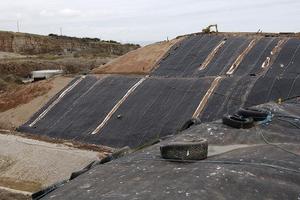
The Court of Appeal will now decide in due course if it is to hear the case, which relates to a long-running dispute over whether fluff is taxable if it is used for ‘engineering’ purposes.
HMRC claims as it is made of residual waste ,fluff should be taxed as waste, whereas the companies which brought the initial claim — Biffa, Devon Waste Management and two Veolia companies — says it serves a purpose (protecting landfill cells).
In January, the waste companies were successful in the Upper Tribunal in appealing an earlier verdict which said the material is taxable (see letsrecycle.com story).
Confirming its intention to appeal this , a spokesperson for HMRC told letsrecycle.com: “HMRC is disappointed with the ruling from the Upper Tribunal and has appealed this to the Court of Appeal”.
Recycling
HMRC argues that the amounts that are being reclaimed constitute a large part of the tax that has been collected; and if the claims were ultimately upheld the environmental purpose of the tax would “therefore be undermined because the cost of landfilling waste would be reduced and this would discourage recycling”.
The tax body says it will continue to “vigorously challenge claims such as these, which we believe are pushing the boundaries of what is taxable”.
“HMRC will vigorously challenge claims such as these, which we believe are pushing the boundaries of what is taxable”
Legislation was introduced in April 2018 to clarify what disposals at landfill sites were subject to tax, with the aim of preventing future litigation.
Long running
The issue dates back to 2008, when HMRC said it would not appeal against a ruling in which a court found in favour of Waste Recycling Group (WRG), which was later acquired by FCC Environment.
In 2009 HMRC decided that base and side fluff claims were in principle, well founded.
However in December 2013, it decided to stop repaying on base and side fluff, but said it would not seek to reclaim what it had already paid and issued a brief explaining this in 2014. Repayments are thought to be around £300 million (see letsrecycle.com story).
If successful at the Court of Appeal, the case could be heard at the Supreme Court of the United Kingdom, the UK’s highest court.

Register for free to comment