
Cllr Matheson singled out the service, which has to be introduced by 1 January 2016, as a factor contributing to the ‘unprecedented’ financial challenge facing the local authority over the next two years.
He estimated Glasgow council will have to save around £103 million over its 2016/17 and 2017/18 – with savings coming from the ‘voluntary redundancy or early retirement’ of some 3,000 staff members.
In order to prepare staff for the changes, Cllr Matheson last week announced the council’s ‘strategic plan refresh’ – which will include a review of the council’s service departments and arm’s-length organisations to become ‘leaner and more efficient’.
Pressures
Mr Matheson said: “The pressures that will be coming in the next two years go beyond anything we’ve had to deal with before. This will come from cuts to our grant, along with other unavoidable cost pressures such as wage inflation and the introduction of domestic food waste collection.”
The authority has said that it is not making the projected costs of the collection service public until later this year. It is also still to be decided who will be contracted to carry out the collections or whether they will be delivered in-house.
The council says that in rolling out the service it is complying with the Waste (Scotland) Regulations 2012, which requires local authorities to offer a food waste recycling service in non-rural areas from January 1 2016. This is due to be followed by a ban on all municipal biodegradable waste to landfill by January 2021.
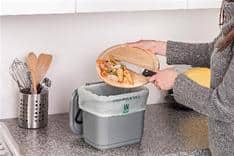
The regulations were anticipated by Glasgow council in June 2013 when it launched a 12-month pilot scheme for 45,800 kerbside, flatted and high rise properties. Around 1,600 tonnes of food waste was collected from these households and treated at ‘several bio-processors’ including Scottish Water’s anaerobic digestion facilities.
Food waste collections have since halted in Glasgow until the city-wide scheme can be rolled out, while households involved will retain the kitchen caddies distributed by the council.
Pilot scheme
The pilot scheme, which cost Glasgow council an estimated £708,000, was made possible by an £880,000 grant from Zero Waste Scotland. In 2012, the authority had stated that it knew of ‘no sources of funding to pay for the introduction of the food waste collection service, other than the money for the trial’ (see letsrecycle.com story).
A report on the council’s ‘strategic plan refresh’ will be considered by the executive committee on June 25.

Register for free to comment