



The rate has been rising steadily since fortnightly collections were phased in from October last year – when the city was recycling 19% of its waste. It reached its own target of 40% last month and now hopes to go beyond this.
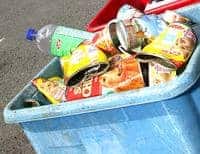
And on the alternate week, plastics, cans, other grades of paper paper and textiles are picked up from a blue recycling box, with green garden waste collected in a reusable sack.
Opposition
When the scheme was first introduced last autumn, it came under fire from some residents and the Collect Refuse in Oxford Weekly (CROW) campaign group was born.
Local newspaper The Oxford Times reported how CROW complained that thousands of green wheelie bins on the city's streets were blighting parts of the town. It also warned that fortnightly collections would pose health risks in summer.
However, council statistics in January reported that more than 4,000 people had requested a smaller wheelie bin for residual waste, suggesting the scheme was proving favourable among residents.
By June, 16,000 people had asked for extra green recycling boxes and 6,800 had requested blue boxes because the containers they had were not enough for the material they wanted to recycle.
Councillor Jean Fooks, Oxford city council's executive member for a cleaner city, said: “We have seen a steady increase in recycling since the beginning of the year, and to achieve 40% so soon is great news.
“Once again it demonstrates that the vast majority of Oxford residents have made good use of the new recycling services we have put in place.”
“Since we introduced the new scheme, residents have recycled almost 11,000 tonnes of waste that before we would have dumped unnecessarily in landfill tips.”
Field officers
Cllr Fooks said the councils' field officers and enforcement teams have been vital in making sure the roll-out of fortnightly waste collections went smoothly.
She explained: “They are out day by day, doing excellent work, helping people to play as big a part in the scheme as they can.
“Their efforts are helping not only to increase the amount of recycling and to improve the quality of what we collect, but also to reduce the nuisance of overflowing bins, waste not being put in the containers provided and bins or boxes being left out too long.”
The Oxfordshire Waste Partnership made up of the county's local authorities including the city council is also looking closely at new technologies for food and residual waste treatment (see letsrecycle.com story).



Register for free to comment