

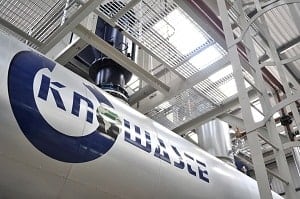
Councils that were sending waste to the UKs first-and-only waste nappy treatment facility have expressed doubt over whether nappy recycling is viable in the UK, after the plant was closed last week.
The operator of the plant, Knowaste (Midlands) Ltd, part of Canadian-owned Knowaste, claimed last week that the sudden closure of the 36,000 tonne-per-year capacity facility on May 22 was necessary to ensure it could set up a network of more sustainable plants elsewhere in the UK (see letsrecycle.com story).
And, the company has sought to reassure clients that it will not disappear from the UK market. However, Knowaste has had difficulties in the past, including in the Netherlands. Knowaste was forced to close its demonstrator facility in Arnhem, Holland, in 2007 where it faced too much competition from energy from waste plants which could dispose of the material more cheaply.
And, Knowaste (Midlands) Ltd was also under some financial pressure. Latest available financial reports for the company seen by letsrecycle.com, show that it had incurred a loss of 2,146,619 operating the West Bromwich facility up to the end of 2011. This lead its auditors to comment that there was significant doubt over the companys ability to continue as a going concern.
Uncertainty
In his report on the company, Stephen Lucey, statutory auditor on behalf of Haines Watts Wales LLP, said that the financial performance for the year ending December 31 2011 indicates the existence of a material uncertainty which may cast significant doubt about the companys ability to continue as a going concern.
Records from Companies House also show that equipment for the West Bromwich site was acquired with the support of loans provided by HSBC Asset Finance, who when contacted by letsrecycle.com declined to comment on the financial situation.
Local authorities have expressed shock and disappointment at the decision to close the plant.
Jan Britton, chief executive of Sandwell metropolitan borough council, which was home to the Knowaste facility, said: We are disappointed by the decision and have told Knowaste that we will do everything we can to help them find a new location within Sandwell. We have been in close contact with the company since they set up the plant. We were interested in sending nappy waste there but also we see advanced waste management as an industry we want to attract to the area for the future.
Mr Britton added: The closure of the plant came just at a point when a number of local authorities were on the cusp of launching collections, but they need reliable outlets for the waste, and this decision could represent poor judgement by Knowaste.
Councils
Meanwhile, councillor Lynn Riley, the executive member for community and environment for Cheshire West and Chester council, which was among the first local authorities to supply the plant, said that the closure of the plant proved that the overall cost of nappy recycling is unviable.
The closure of the Knowaste facility, the only one of its kind in England, signals that despite proving the concept, overall costs remain for the moment at a level which makes this form of recycling unviable.
Councillor Lynn Riley, Cheshire West and Chester council
She said: The trial was put in place to ensure that the new technology was financially viable, making not only environmental but economic sense and we were actively working on expanding the scope of the service.
The closure of the Knowaste facility, the only one of its kind in England, signals that despite proving the concept, overall costs remain for the moment at a level which makes this form of recycling unviable.
Responding to the comments, Paul Richardson, Knowastes UK business development director, said that closure of the plant was necessary to enable the company to develop new facilities across the UK, which would make the process more cost effective for councils.
Develop
Mr Richardson has described the West Bromwich plant as the only one of its kind in the world.
He said: We have demonstrated that nappy recycling can be done in practice, but I think that what is being said is that if the material has to travel a distance it is not viable unless the facility is located locally. If you add on the transportation cost on top of the cost of collections then that becomes less sustainable.
Mr Richardson said that locations within the West Midlands, Manchester, South Wales and Scotland had already been identified for the development of new sites that would make it more viable.
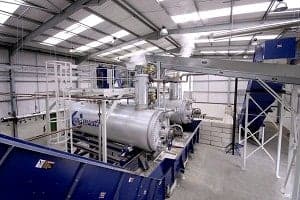
Knowastes West Bromwich facility was opened in September 2011, having cost around 4.5 million to set up. Mr Richardson told letsrecycle.com that the company had not received any grant money to establish the facility, and that it hoped to announce the location of its next plant within three months.
He also said the company had hoped to keep the facility running while it developed new facilities, but had opted to focus on the development of new facilities.
He added: We were reviewing the situation for some time and we were looking to keep the West Bromwich site open, but we decided that on the financial side, the money would be better spent on establishing new sites, rather than developing the existing facility.
Cardiff
Meanwhile Cardiff city council, which was also among the first councils to use the West Bromwich plant, have branded the decision to close the facility as disappointing and said it may lead to a 1% drop in recycling rates.
The councils member for the Environment councillor Ashley Govier, said: This administration is exploring every opportunity to recycle and reuse as much of our waste as possible and the nappy recycling trial was a key part of this approach. Along with our Monmouth council partners, we were the first councils in the UK to undertake this initiative and it is very disappointing that Knowaste have ceased to assist us in this operation.
It is possible that they will develop a new and improved facility but we will urgently seek other options as there is potential for the council to lose 1% of our recycling rate. Our hygiene service for residents is unaffected by this development but it is unacceptable to the administration that our recycling rates could be affected and as a result incurring a greater tax burden by land filling the nappies we collect. Alternative options are being considered and we will bring forward proposals as soon as possible.
While Knowaste received large volumes of nappies at its plant, the precise users of the plastics material which it generated have not been revealed. The plant is seen as needing to charge a gate fee for the nappies and also gain revenue from the sales of the plastic and fibre products it intended to produce.
Polymers
Related Links
A significant challenge for the business was ensuring that it could provided a secondary material of a suitable quality and it is unclear whether this was achieved. Knowastes Canadian chief executive Roy Brown, in April 2012, spoke of work to improve the process including improvements to the moisture contents of the polymers produced at the plant.
On the fibre side the company said it had trials with a cardboard manufacturer. on the plastics side a large number of potential users of the product are listed on its website.

[…] The company had been seeking a site for a new nappy recycling facility since its original plant in West Bromwich – the UK’s first such facility – was unexpectedly forced to close in May 2013, amid concern over operation costs and securing markets for the end-products (see letsrecycle.com story). […]