

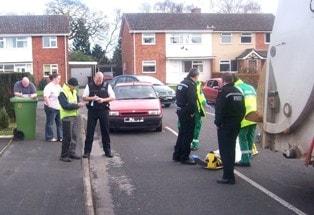
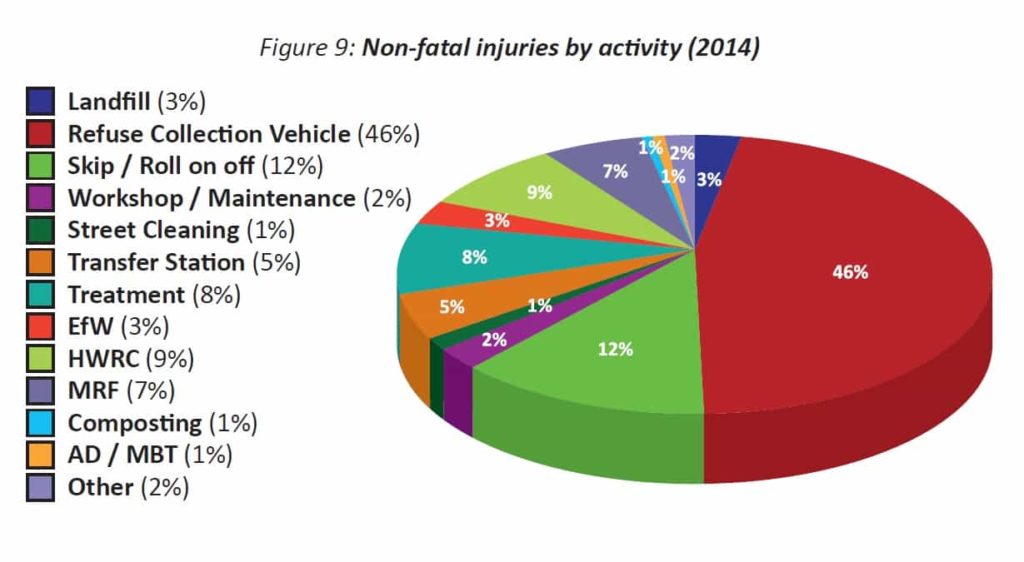
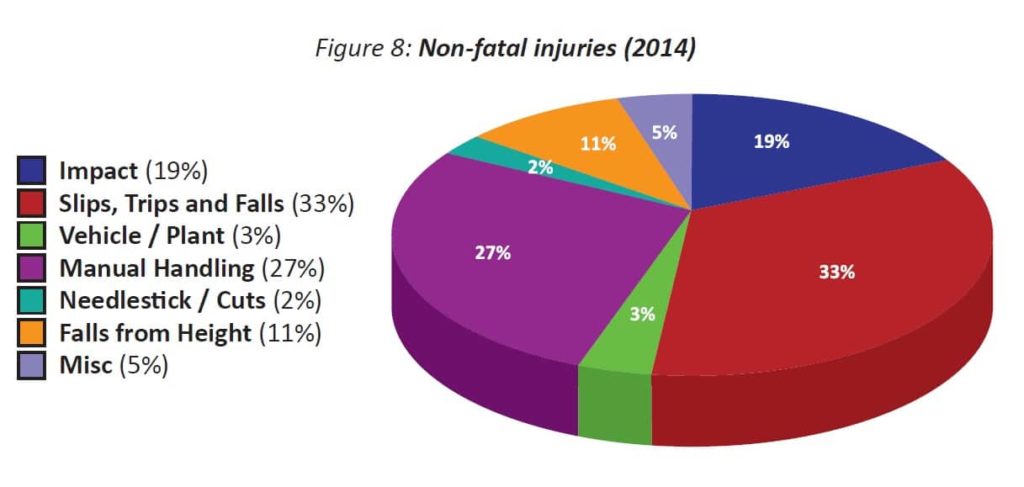
According to ESA, around 58% of non-fatal accidents in the sector are linked to waste collection activities, many of which come about through slips, trips or falls, or manual handling.
Waste has long been seen as among the most hazardous industrial sectors in which to work in the country, and the report confirms that despite accounting for 0.6% of the overall workforce in Britain, Reporting of Injuries, Diseases and Dangerous Occurrences Regulations (RIDDOR) injury rates for the waste sector are close to four times the national average.
Link: Aiming for Zero Harm in the Waste & Recycling Industry
The ESA report seeks to present data from the organisation’s members, which includes waste companies such as Suez, Veolia and Grundon, in order to provide a ‘specific injury rate’ for the waste sector. This has been disaggregated from Health & Safety Executive (HSE) data – which includes accident rates relating to local authority, third sector and non-ESA member waste company activities.
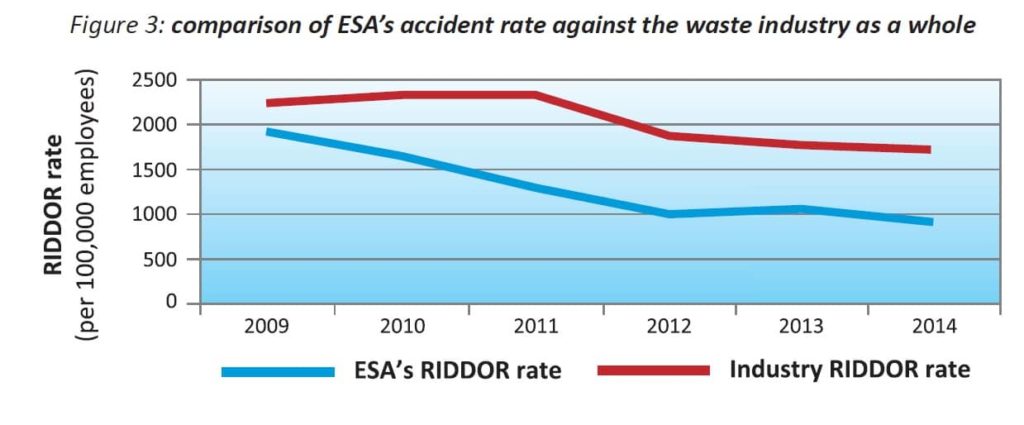
The Association claims that its members have been at the forefront of efforts to reduce accident rates, with the number of reported injuries having reduced by 78% amongst ESA members since the launch of the Association’s Accident Reduction Charter in 2004.
Charter
Prior to the adoption of the Charter, to which ESA members must commit ‘visible’ leadership on health and safety, ESA claims that its members had reported close to 4,000 accidents per 100,000 employees per year.
The report states: “ESA’s accident rate (total accidents per 100,000 employees) currently stands at 919 and is lower than the provisional 2014/15 accident rate of 1,715 reported by HSE for the waste and recycling industry as a whole. Comparison of ESA’s data against HSE’s shows that the rate of injury reduction achieved by ESA Members since 2009 (52.3% reduction) has not been mirrored by the wider industry (23.7% reduction).
“A key aim for ESA is to ensure that the success and momentum behind our efforts to reduce accidents is disseminated more widely across the entire industry, so that all may benefit from a reduction in injuries.”
ESA’s policy advisor, Stephen Freeland said: “2004 marked a turning point for ESA, in which we agreed a more formal, structured approach to tackling our industry’s health and safety record head on. While there is clearly much more to do, our injury rate over the years has been heading in the right direction.
“We are proud of the fact that our health and safety performance exceeds the rest of the waste management industry. In fact, perhaps more surprisingly, the report also shows that the reduction in accidents achieved over the last five years by ESA members surpasses most other industrial sectors and the ‘all UK industry’ average.”
Collection
On waste collection, the report notes that this remains one of the most hazardous aspects of the industry’s operations, as work is undertaken under ‘dynamic and variable conditions of the public highway’ and with a ‘high degree of interaction between vehicles’.
ESA adds that it has been involved in the development of industry guidance and a risk assessment template for members to record and assess risk when collecting waste from new premises, in a bid to mitigate these issues.
The report also presents examples of initiatives carried out by ESA members to reduce injury rates. This includes Biffa’s ‘i for safety’ campaign a behavioural change initiative carried out amongst staff, as well as Grundon’s Safety Week, an annual initiative aimed at highlighting health and safety issues.

Register for free to comment