



East Cambridgeshire has become one of the first English councils to attempt to justify the introduction of commingled recycling collections by interpreting TEEP guidelines, writes Michael Holder.
With the aim of increasing product quality, under the revised European Waste Framework Directive Member States are effectively required to set up separate collections of recyclable materials where necessary and practicable from January 1 2015. But, it does not automatically mean that councils have to collect recyclable materials separately if they choose not to they have to explain why it is not necessary or practicable or both.
Defra has not yet published any official guidance to assist local authorities interpreting TEEP regulations although a letter was sent out in October 2013 by the then-waste and recycling minister, Lord de Mauley, giving advice on the issue (see letsrecycle.com story).
DCLG
However, East Cambridgeshire received £5 million from the Department for Communities and Local Government (DCLG) in 2012 to fund a new commingled waste and recycling collection service.
The council has now finished rolling out this service, which includes a weekly black-bag collection service and alternate weekly collections of food waste and commingled dry recycling operated by Veolia.
And, in a statement agreed by members of the council’s Waste and Environment Sub-Committee, the council argues that its commingled service complies with TEEP guidance as it is cheaper and more environmentally friendly than a kerbside separated service while also boosting recycling rates.
The council states that it is satisfied that the separation will provide quality products that will be able to satisfy any future guidance.
Efficiency
In its explanatory statement, the council points out that operating separated material collections in East Cambridgeshire would require separate vehicles for different materials, increasing the number of collections vehicles and staff required and increasing the level of disruption in an area caused by collections.
It is estimated in the document that each extra vehicle would result in additional costs for purchase/lease, running costs and crew of around £120,000. The council believes it would require eight vehicles for a separated collection service, whereas it currently operates five for its comingled service.
However, commingled collections enable the use of conventional refuse collection vehicles, which the council argues creates a more efficient process requiring fewer journeys and less down time for mechanical servicing.
Furthermore, collection of commingled materials in a single, closed plastic bin avoids need for handling of materials by crews, thereby reducing potential injuries, the council statement points out.
Quality
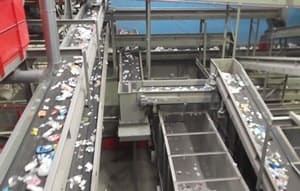
Under a contract with AmeyCespa, East Cambridgeshire’s recycled material is taken to the firms 60,000 tonne-a-year capacity materials recycling facility (MRF) at Waterbeach, which opened in January 2013 (see letsrecycle.com story).
Addressing Defra concerns over glass fragment contamination of paper, the council highlights AmeyCespas supply of MRF paper to Aylesford Newsprint, a process which it says is a high value use of material, with no problems being reported due to glass contamination.
According to the council, AmeyCespa are reporting a 5% reject rate of material processed through its MRF principally nappies, ceramics and fines which it attributes to residents including incorrect items rather than demonstrating an inefficient sorting process.
The council TEEP statement also highlights the number of ready markets serviced by AmeyCespa for high quality material, including glass to Berryman in Yorkshire, cartons to Tetrapak in Wrexham and mixed plastic bottles to Jayplas in Corby.
Additionally, the council believes that with its new commingled service it can achieve a recycling rate of between 45-50%, while its current rate stands at 34%. Such an increase would potentially bring an estimated 56,000 a year in recycling credits
The council states that commingled wheeled bin collections achieve the highest recycling rates, highlighting recent Defra recycling league tables which had 13 of the top 20 English councils operating commingled collections in 2011/12.


Register for free to comment