

The West Midlands council intends to promote the sector alongside other industries such as food production, manufacturing, and health and health services, as a means of increasing inward investment within its boundaries

Jan Britton, the council's executive director of urban regeneration, said: “We recognise that waste management and recycling are important industries of the future. There may be useful synergies with Sandwell's existing industries – the borough is known for its manufacturing but we also have a strong food sector as well.”
Attracting recycling and resource recovery to the area would also go some way to helping curb the projected gap in waste processing capacity in the West Midlands, with regional development agency Advantage West Midlands estimating there will by a 3.1million tonne deficit in waste processing capacity by 2021 (see letsrecycle.com story).
Developments
Mr Britton pointed to the current array of proposed waste and recycling developments in the region as examples of its potential for investment.
In particular, he highlighted the European Metal Recycling proposal to construct one of the UK's largest gasification facilities in West Bromwich (see letsrecycle.com story) and nappy recycling firm Knowaste's plans to develop a nappy recycling plant nearby (see letsrecycle.com story).
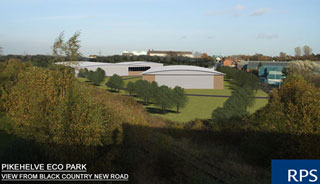
The borough council is also currently in the advanced stages of delivering its Waste Improvement Plan by letting a long-term waste management contract worth £1 billion, which is expected to involve the development of a new 'Eco Park' at Pikehelve.
The deal is expected to be awarded in October 2010, after Sandwell cut the shortlist of bidders to three firms in March 2009 (see letsrecycle.com story).
Sandwell's Economic Regeneration Strategy is set to be formally published in the first quarter of 2010.

Register for free to comment