

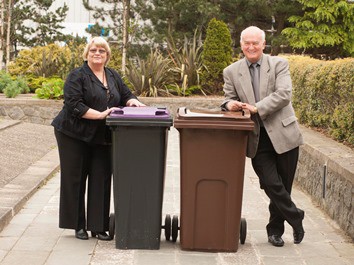
Kerbside recycling capacity for residents in Aberdeen could treble alongside a reduction in residual waste bin capacity under plans approved by the city councils housing and environment committee yesterday (May 20).
Under the proposed new service, a 240-litre wheeled bin for fully-commingled kerbside recycling including glass would replace the existing 70-litre bag and box for separated glass system.
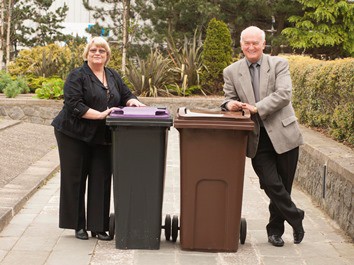
This would allow residents to discard all recyclable materials into the single wheeled bin instead of separating materials while also more than trebling kerbside recycling capacity, the council said.
A report put before the committee concluded that offering a separate collection of glass to residents would incur a significant cost, while encouraging residents to visit bring-banks to recycle glass in order to keep the material separate and boost glass quality would inevitably lead to a lower overall capture rate for the material.
In addition, the committee agreed to reduce the capacity of existing household waste wheeled bins from 240 litres to 180 litres with the aim of increasing recycling rates while decreasing the amount of waste sent to landfill.
Meanwhile, the plans approved yesterday would also see more materials accepted for recycling, with plastic pots, tubs and trays as well as waxed food and drink cartons added to the existing collection of paper, cardboard, plastics, cans and glass.
According to the committee, encouraging households to remove more bulky recyclable materials from the general waste stream would reduce the need for the existing 240-litre wheeled bin for general waste.
‘Implementing the proposals within the Waste Strategy will make Aberdeen a zero waste city, providing long term social, economic and environmental benefits to us all.’
Cllr Jean Morrison, Aberdeen city council zero waste management sub-committee convener
The new service would likely be rolled out in 2015/16, the committee said, although the frequency of its current fortnightly kerbside collections for around 75,000 households will not change.
The committee report highlighted a number of UK local authorities with high recycling rates such as Rochford and South Oxfordshire councils which had 180-litre residual waste capacity and 240-litre mixed recycling with glass capacity.
Simpler
Councillor Jean Morrison, convener of the zero waste management sub-committee, said: A single, large wheeled bin for recycling would drastically increase the volume of waste a single household can recycle and make the process much simpler, removing the necessity to separate recyclable materials into different containers.
Clearly the council has to balance its own aspirations and ambitions for waste management with those of the citys citizens and provide waste collection services that are suitable and appropriate for all.
Councillor Morrison added: We believe that reducing the capacity of the general waste wheeled bin while vastly increasing the capacity to recycle would strike the best balance as we seek to drive up recycling rates and become less reliant on landfill.
Related Links
According to the council, the cost of new bins, for either general waste or mixed recycling, is budgeted in the capital plan allocation for the council’s zero waste project and would be offset by the reduction in landfill tax resulting from higher recycling rates.
Earlier this month, Aberdeen councillors approved an updated waste strategy for the city up to 2025, which includes plans to develop an energy-from-waste (EfW) plant, a materials recycling facility (MRF) and organic waste treatment facilities (see letsrecycle.com story).

Register for free to comment