

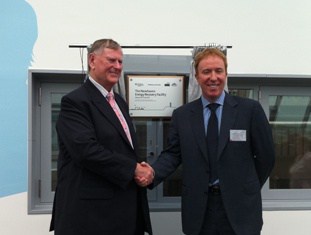
The leader of East Sussex county council declared the Newhaven Energy Recovery Facility a triumph for fact and science over attempts to mislead the public at the plants official opening yesterday (July 4).
Councillor Peter Jones dismissed the voodoo science of those who have opposed the plants construction before urging residents and members of Newhaven town council to acknowledge the benefits of the facility for the local community.
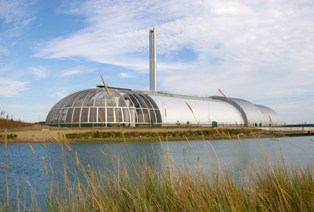
Located on the banks of the Ouse Estuary in East Sussex, theenergy-from-waste incineratorbegan operation in June 2011 and processes 210,000 tonnes of local waste per annum.
The facility has been developed by Veolia Environmental Services under a 30-year waste treatment contractwith East Sussex county council and Brighton& Hove city council, which runs until 2033.The plantwill enablethe councilsto stop sending waste to landfill in the county, where the last remaining landfill site is due to close in 2014, saving them 2.5 million a year in the process.
But, the project has faced resistance from local residents and Newhaven town council who claim theincinerator is a blight on the landscape. They have been backed by protest groups Defenders of the Ouse Valley and Estuary (DOVE) as well as Friends of the Earth, who mounted a failed legal attempt for a formal Judicial Review of the project in 2008. The most notable opponent in recent times has been Liberal Democrat MP for Lewes Norman Baker who boycotted yesterdays opening.
Challenge
In his speech, Councillor Jones expressed disappointment at the level of hostility the project has faced, saying: Those who oppose the facility base their arguments on out-of-date designs which were outlawed years ago. I think it is very sad as a result of that that the local population have not engaged on a level they could have. We want to throw out this challenge and recognise this facility for what it is.
Councillor Jones continued: I see this incinerator as the ultimate recycling facility. We can move from seeing waste as a burden to viewing it as an asset to be used for good. This plant reduces the amount of waste sent to landfill, produces electricity, and will save taxpayers 2.5 million in waste disposal costs… I am proud of this facility and what it is achieving on a daily basis.
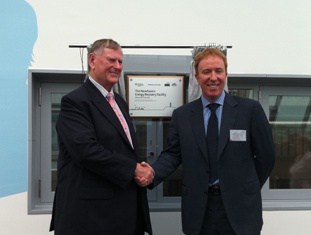
The councillors speech was followed by another from Gavin Graveson, executive director, treatment, at Veolia ES, who praised the facilitys amazing design and broad progressive vision before helping to unveil a commemorative plaque.
Mr Graveson said: We have been in East Sussex ten years. It has been a very long road but this is the final piece of the jigsaw. As you know this facility had some controversy in the planning stages but we are here and proud of it. The plant has been operating very successfully and will hopefully continue to do so.
Electricity
Any household waste that can be recycled in the county is taken to Veolias materials recycling facility (MRF) at Hollingsdean for sorting or to the companys in-vessel composting facility at Whitesmith.
Household waste which cannot be recycled is transported to the Newhaven EfW plant where bulkier items, such as mattresses, can be put through a shredder. Around 20,000 tonnes of waste a year, or 10% of the totalfeedstock for thefacility, comes from local businesses. The waste is then mixed and incinerated, and the associated heat turns water into steam to power an electrical generator, which feeds electricity into the National Grid. The facility will provide enough electricity to power 25,000 nearby homes.
Robert Hunt, executive director at Veolia, said: As well as generating the power for 25,000 homes it is hoped that there will be the opportunity to provide heat for nearby users and so create more local jobs.This is clear evidence of the opportunities created by investment in the delivery of local infrastructure projects and we are also involved in a number of community based projects which already receive our active support.
For every five tonnes of waste that is treated in the facility, around one tonne of bottom ash is generated. Metal is removed from this and sold to a local reprocessor and theash passed to neighbouring company Day Group Aggregates for use in applications such as road coverings.

Register for free to comment