

Tamworth and Lichfield councils have told residents to stop presenting food waste alongside garden waste for collection at the kerbside, claiming that treating the materials mixed together is too expensive.
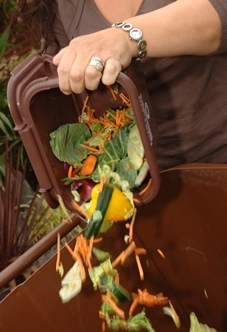
Instead, from this summer, residents are being asked either to home compost their food waste or place it in residual waste bins, bringing an end to food waste collection services for the 77,000 households in the region.
The move is expected to save the authorities a total of 400,000 per year.
Previously, Tamworth borough council and Lichfield district council which have operated joint in-house waste and recycling collection services since 2010 (see letsrecycle.com story) collected food and garden waste together in brown (Lichfield) and green (Tamworth) wheeled bins on a fortnightly basis.
Lichfield has collected food and garden waste together since 2007, while Tamworth has collected the two materials together since 2009.
Through this joint arrangement, mixed garden and food waste was sent for in-vessel composting (IVC), which composts material at a higher temperature in order to destroy bacteria in the food waste.
However, according to the councils, it is both cheaper and more efficient to compost solely garden waste outside at open-windrow facilities rather than at IVC facilities. The current IVC cost is around 40-50 per tonne for the council, compared to the expected 21-25 per tonne gate fee of open windrow processing.
The councils also claim that many residents already compost at home and only 20% of people put food waste in their green or brown bins, suggesting that sending material for IVC may sometimes have been unnecessary as much of the material is made up of garden waste.
Haulage
In addition, collecting food and garden waste mixed together costs more money in haulage, the councils claim, as council collection vehicles have to travel a considerable distance an average of 130,000 miles a year to the IVC facilities currently used.
Tamworth and Lichfield mixed green and food waste is currently processed at IVC facilities in Etwall in Derbyshire, operated by Biffa, and Shareshill in Wolverhampton, operated by Jack Moody subsidiary In-Vessel Composting UK.
However, the councils are currently tendering for new organic waste processing contracts with open windrow operators to commence from October 2014, and the process will consider the location of the facility or facilities and the councils ability to reduce the mileage of collection vehicles.
In the meantime, it is hoped that by encouraging residents to stop putting food waste in with garden waste ahead of the new contracts being introduced, the green and brown bins will not be contaminated and rejected when the material starts being processed at open windrow facilities.
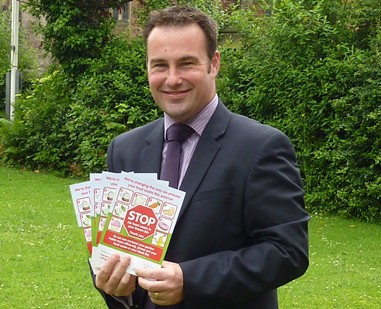
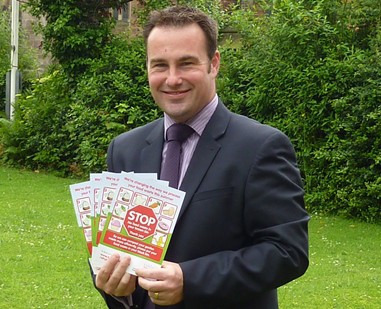
Stickers are being placed on bins and leaflets delivered to households this month in order to inform residents of the changes to collection services and encourage them to put food waste in their residual waste bins instead of their garden waste bins.
‘Because around only 20% of people put food waste in their brown bin, as many compost at home instead, we’re composting garden waste at a higher temperature, which isnt efficient. This is why we are now asking everyone to put their food waste in their black bins from now on.’
Lichfield district councillor Iain Eadie
Lichfield district councillor Iain Eadie, cabinet member for IT and waste management, said: Because around only 20% of people put food waste in their brown bin, as many compost at home instead, we’re composting garden waste at a higher temperature, which isnt efficient. This is why we are now asking everyone to put their food waste in their black bins from now on.
Tamworth borough councillor Michelle Thurgood, cabinet member for environment and waste management, added: This one simple change will help save Tamworth and Lichfield 400,000, which will allow us to protect important frontline services. Currently we are spending a lot of money on recycling food waste, when in reality few people are using this service.
Four Ashes EfW
Residents who do not compost food waste at home are being encouraged by the councils to dispose of food waste with their residual waste, as since earlier this year this waste is sent for energy recovery instead of being landfilled.
Collected fortnightly by the councils, residual waste processed at Staffordshires 300,000 tonnes per year capacity energy-from-waste (EfW) plant on the Four Ashes Industrial Estate, which began operations in January.
The 122 million facility has been developed under a 25-year, 1 billion PFI-funded waste treatment contract between the Staffordshire Waste Partnership and Veolia Environmental Services agreed in July 2010 (see letsrecycle.com story).

Register for free to comment