

Food waste treatment firm ReFood UK has been granted planning permission to develop an anaerobic digestion (AD) facility on Dagenham Dock with the capacity to process 160,000 tonnes of food waste and organic liquids per year.
And, Viridors 30,000 tonnes-per-year capacity AD plant being developed to take food waste from Somerset Waste Partnership has entered its commissioning phase before it expected opening in Spring 2014.
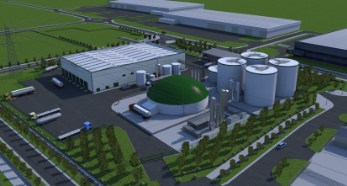
Barking and Dagenham borough councils planning committee approved ReFood UKs plans on Monday (November 11) and the company part of the PDM Group claims the development will be one of Londons biggest food waste recycling plants.
Construction is set to begin on the development in January 2014, which also includes an animal by-products transfer station capable of processing 55,000 tonnes of material each year, as well ancillary equipment and a two-storey office block. More than 30 million is being invested in the development.
When operational, the AD plant will produce enough low carbon biogas for the National Grid as well as a liquid digestate fertiliser for agricultural use.
And, around 95 full time jobs are expected to be created 35 will be new jobs and around 60 relocated from the nearby Silvertown by-product plant, which is being developed into housing.
Investment
Plans were first announced for the facility in July 2013 by PDM Group as part of a 91 million investment package in food waste recycling (see letsrecycle.com story). This package will also see an AD facility built in Widnes as well as the expansion of Refoods AD plant in Doncaster.
The planning approval follows the launch of ReFood UKs 2020 Vision roadmap report for food waste this week, in which the company called for a ban on food waste to landfill by 2020 (see letsrecycle.com story).
Somerset AD plant
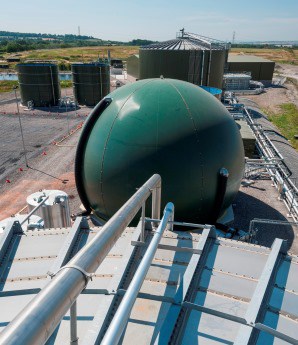
Meanwhile, Somerset Waste Partnerships 10 million AD facility near Bridgwater has entered its commissioning phase and has produced its first power from food waste.
The 30,000 tonnes-per-year capacity plant in Walpole is being developed by waste management company Viridor alongside construction firm Monsal. It is set to begin operating fully in Spring 2014.
At least 19,000 tonnes of food waste feedstock is to be provided by the Partnership (SWP)s six councils, with the remaining capacity used to process waste from restaurants, catering firms, pubs, shops and other businesses in the local area.
The plant is producing methane that drives the gas turbines to generate electricity to export to the national grid as well as to be used within the plant itself. When fully operational, the plant will generate 1MW of power, enough to supply 1,700 homes.
Digestate is also being produced as part of the process and is currently being analysed to gain approval from the Environment Agency before it can be used as an agricultural biofertiliser by Somerset farmers.
Viridor began construction of the plant in April 2012 as part of its long-term contract to manage Somersets waste, which runs from 2006 until March 31 2022 (see letsrecycle.com story).
SWP managing director Steve Read said: This is an important step for the AD facility and for Somerset, so we can recycle all of our food waste into clean green power. We want every family to make sure no food waste goes into their refuse bins that is wasteful, polluting and costs millions and to put it all in the kerbside food waste container.
According to the Partnership, the plant will now be fed with increasing amounts of food waste from Somerset as part of the current commissioning phase before it opens next year.
The Somerset Waste Partnership manages waste and recycling services on behalf of: Mendip, Sedgemoor, South Somerset and West Somerset district councils, as well as Taunton Deane borough council and Somerset county council.

Register for free to comment