


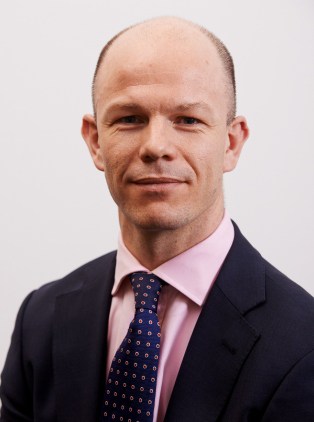
The head of waste at the governments own Green Investment Bank has stressed that there is a real need for investment in waste treatment capacity in the UK, despite Defra opting to withdraw funding for several projects throughout 2013.
Chris Holmes, managing director of the GIBs waste and bio-energy arm told letsrecycle.com that the organisation has conducted a thorough analysis of waste treatment capacity currently available in the UK and has concluded that more infrastructure is needed.
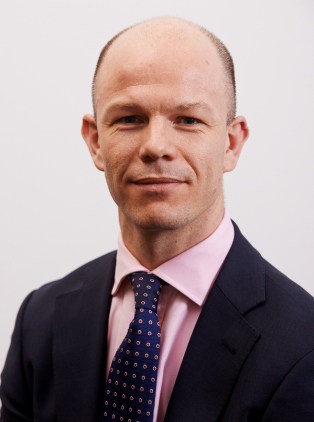
However, the Bank also believes that it is important to ensure that any additional infrastructure caters for the commercial & industrial waste market where it is predicted there may be a greater shortfall in the amount of treatment capacity to waste available.
There has been widespread disagreement over the amount of treatment infrastructure available in the UK, since Defra opted to withdraw funding for a number of PFI waste projects in early 2013. The department claimed then that there was sufficient infrastructure in the pipeline to meet landfill diversion targets (see letsrecycle.com story).
This is despite Defra also having little data on waste arisings for the C&I sector (see letsrecycle.com story). Some waste experts are predicting that a further 10-15 billion investment may be required if the total commercial and industrial waste arisings going to landfill are also to be diverted and treated.
Mr Holmes, who joined the GIB following the departure of Adrian Judge in November 2013, said that the Bank had been very interested in data compiled by the waste industry which estimated the likely availability of treatment capacity in the future.
Waste arisings
He said: Defras announcement came a while ago and since then a few projects have lost PFI funding but some have pressed ahead without it. There have been a number of reports in the meantime looking at total waste arisings of not only municipal waste but also C&I waste. We are very interested in those reports.
‘There have been a number of reports in the meantime looking at total waste arisings of not only municipal waste but also C&I waste. We are very interested in those reports.’
Chris Holmes, Green Investment Bank
We have done our own analysis that we are hoping to share. We think its a very important to show that there is a need for additional infrastructure to be built, which is our view, but we need to be cognisant of the difference in treating waste from C&I sources: there is a different risk profile and it is important for the plant to have the ability to compete on a national scale.
Assessment
Mr Holmes also commented on the process that is undertaken to assess whether an application is suitable for finance, adding that there are three primary areas that the GIB looks at to determine if it should commit finance for a project.
He said: We try to look at three areas. The first is who is behind the project. There are normally a wide range of parties involved, you want to know who is behind that as a shareholder and do they have the necessary experience and balance sheet strength to ensure that if there any problems they are the right partners to make it work.
Related Links
Another area is the feedstock side: where the waste is coming from, who is aggregating it in terms of supply. Finally, we look at the technology that is being proposed. The more proven it is the easier it is to analyse, but that is not to say we would not finance any other technology.
Perhaps unlike other sources of finance, we are happy to spend time to determine whether technologies are credible. At the same time we have to draw a line at some point and say if it is too early for us to invest in a technology.

Register for free to comment