

AmeyCespa’s mechanical biological treatment (MBT) facility at Waterbeach is now working to full capacity and taking Cambridgeshire’s residual waste again after a serious failure at the facility in 2012.
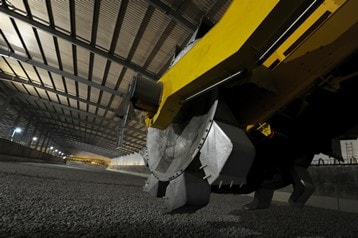
In September 2012, one of two large compost-turning arms at AmeyCespas 200,000 tonnes per year capacity mechanical biological treatment (MBT) plant in Waterbeach suddenly, and catastrophically, failed without warning, the machine had ground to a halt one night after its supporting beam broke.
As the essential piece of equipment in the operation of the MBT, its break-down forced AmeyCespa to shut the plant while it investigated the cause of the incident and worked towards making necessary repairs.
However, with the facility built as part of a 28-year, 731 million PFI contract signed in 2008 between Cambridgeshire county council and Donarbon (later acquired by AmeyCespa), it meant household waste from across the county was in the meantime sent to landfill as much as 2,200 tonnes each week.
AmeyCespa is now in the midst of ongoing legal action against BAM Nuttall, the contractor that installed the failed machinery, which was manufactured by Austrian firm Kelag Umwelttechnik.
Yet, despite these setbacks and the complaints from some Cambridgeshire residents that followed, AmeyCespa managed to get the plant fully back up and running, taking all the countys waste again by November 2013 (see letsrecycle.com story).
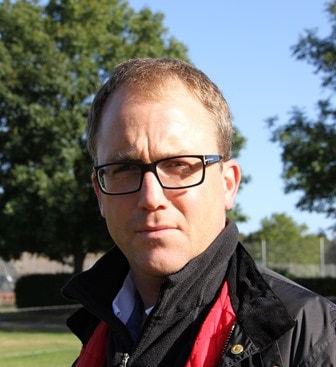
What we want to do is show the process that it took to get here, says AmeyCespas Cambridgeshire account director Tom Coleman, who only joined the company several months after the machinery failed in May 2013. One of the questions we get asked is: why did it take so long to get things done? But actually, I was amazed at how quickly we managed to get things back up and running at full capacity.
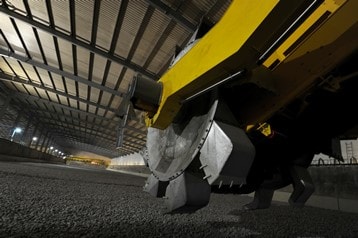
Once the investigation of the failure was complete in March 2013, the company began procuring for a new equipment provider, with Spanish firm Taim Weser chosen to manufacture and install the new compost turning arm, which Mr Coleman describes as exceptionally good contractors.
He explains that the investigation of the failure enabled the AmeyCespa and Taim Weser to learn from the design of the machinery in order to produce a bespoke piece of kit which he is quick to assure has no risk of the same mechanical problem reoccurring.
Then, inside six months, AmeyCespas Waterbeach team and its project contractor Stadler UK worked to get the replacement machinery in place and the plant back up to full capacity.
Mr Coleman adds: That is unheard of that is an extreme example of what can be done in a short space of time.
But, while he accepts that mistakes were made, he is adamant that AmeyCespa has been extra vigilant in getting the plant back up and running again: Lessons were learned at the very start of that process to make sure that the same issues wont crop up.
Additional advantage was also taken of the plants downtime to refurbish the rest of the facility, with sorting equipment and an eddy current separator put in place by Stadler UK. Shredders and three trommels are also used to sort material into 80mm, 150mm, 300mm and oversize factions of material.
In addition, the new kit includes includes bespoke sensor-based TITECH technology manufactured by TOMRA Sorting Solutions, which uses x-ray transmission to recover inert material such as glass, stone, ceramic and bones from fines.
Installed at the back-end of the process, the x-ray system recovers inert material which can then be used for construction applications, while any organic material left at the end of this process is suitable for anaerobic digestion all part of the companys ongoing aim to keep increasing the amount of material it diverts from landfill.
The turning arm itself works its way across two large lanes of what becomes compost-like-output (CLO) which is processed from the residual waste, fluffing up the material at regular intervals to a height of roughly four metres, with water added if needed. This is because, over time, the material drops in height to around two metres, so the turning arm is crucial to the seven-week CLO-producing process.
Overall, AmeyCespa invested several millions in repairing and refurbishing the MBT plant.
Everything in there bar the basic equipment is brand new and you can get the feel for that significant investment, says Mr Coleman.
The vogue for longer-term PFI contracts may now be in the past following the economic downturn and tighter council and government budgets, but such a contract has enabled AmeyCespa in this case to invest heavily in improvements without taking extra taxpayer money.
I would suggest that this is the perfect example of PFI working because although there was a significant floor in the machinery, there was no break in service and tax payers did not have to foot any of the bill we had to pay all the landfill tax, says Mr Coleman.
The MBT plant is now taking around 120,000 tonnes per year of residual waste, with some of the waste also coming from local trade contracts as well as a black bag agreement with Northamptonshire county council.
The basis for the Cambridgeshire contract is landfill avoidance by producing CLO, the plant reduces the amount of material going to landfill by about 50%, says Mr Coleman.
AmeyCespa
Despite the size of the MBT plant, it only forms a part of AmeyCespas operations at the 400-acre Waterbeach site. Indeed, a car or van is needed to take a complete tour of its facilities, which include a PPC-permitted landfill cell for mixed, non-hazardous household and business waste, where some of Cambridgeshires waste was sent during the MBTs downtime.
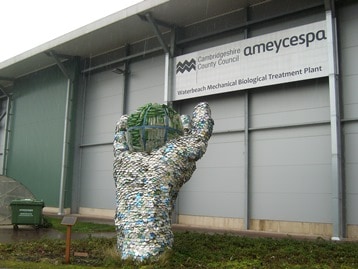
Also situated inside the MBT building is an education centre, which is regularly visited by local students who are able to view first hand through a glass window the CLO-turning operation inside in the 200m by 70m compost hall. Indeed, students even helped design the eye-catching fist sculpture at the entrance to the plant, which is made from crushed metal cans.
Elsewhere on site, 7,000 tonnes per year of soil conditioner is produced through open windrow composting of 12,000 tonnes of organic waste input largely garden waste delivered from Cambridgeshires nine HWRCs in large skips, but some also comes from private businesses, tree surgeons and landscape gardeners.
Meanwhile, there is also a 70,000 tonnes per year capacity in-vessel composting (IVC) facility, which like the open windrow operation produces 12mm and 20mm product to PAS 100 quality. Nearby residents can visit the Waterbeach site to pick up compost themselves for free at the gates, while some is also sold at Cambridgeshires HWRCs.
And, situated in a rural area just outside Cambridge, Mr Coleman says that there is no problem with finding a market for Waterbeachs organic output, with customers in the area queuing up to take AmeyCespas agricultural compost.
MRF
A more recent addition to the site, a materials recycling facility (MRF) also opened last year with the initial capacity to process 60,000 tonnes of South Cambridgeshire district council waste and commercial waste each year, which could increase in future to 100,000 tonnes (see letsrecycle.com story).
The MRF uses 11 types of sorting equipment including overband magnets to extract steel cans, eddy current separators for aluminium cans, screening systems to remove glass and near infrared separators for different types of plastics and paper.
Due to the nature of the MRFs feedstock little of business waste is glass, while South Cambridgeshire collects paper and card separately from glass there is not too much of an issue with separating glass from paper at Waterbeach, although the facility is capable of doing so.
And, commenting on the continuing debate over MRF quality glass and whether the material should be collected separately from other recyclables, Mr Coleman says: I have worked with MRFs for more than 10 years and that is both with glass and without glass. My take on it is that if you have got a good MRF there is no reason why you cannot be taking it with glass. Like all businesses there are some that are the jewel in the crown and some that are not they all have a role to play but it depends on the kind of material that you are taking in.
AmeyCespa
Finally, also on site alongside a small experimental anaerobic digestion (AD) plant operated by biomass and AD firm Summerleaze, AmeyCespa also handles smaller tonnages of commercial bulky waste, wood waste and construction and demolition waste in different sections of the Waterbeach premises.
In total, the Waterbeach site is estimated to handle almost a third of a million tonnes of waste each year from local authorities, businesses and AmeyCespas skip hire.
Mr Coleman, who joined the company less than a year ago after previous stints with Waste Recycling Group (later acquired by FCC Environment) and Cory Environmental, says the range of operations at Waterbeach and the speed at which the MBT plant was refurbished make it an exciting company to work for.
Our operations here and across the country provide total waste management. I am incredibly proud of what we have got and that is what makes it so exciting, Mr Coleman says.
But, he adds: We know over the next 5-10 years we will be making improvements to it. An organisation such as ours cannot sit on our laurels.

Subscribe for free