


The company, which is based at Portlaoise, intends to develop five more plants in the Ireland as well as 30 in the UK and up to 60 across the whole of the continent.
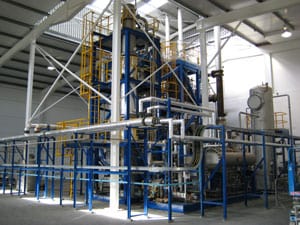
The Portlaoise plant, which was completed in December 2009 but has just passed operational tests, is intended to handle 3,000 tonnes of mixed plastic waste-a-year and produce diesel and gasoline equivalents.
Mixed plastic is sourced from waste management companies based in the province and also from the agricultural sector under the Irish agricultural plastics collection scheme – which looks to increase the amount of waste plastic collected from the farming sector.
Over the next five to seven years, the company intends to develop relationships with “multi-national” firms in order to allow the firm to expand its operations to the UK and mainland Europe. The aim is to develop 570,000 tonnes-a-year of mixed plastic waste treatment capacity.
Mixed plastic
The company added that it would look to develop waste-to-fuel plants on existing waste collection sites, in order to help ensure a feedstock of mixed plastic and also lessen the impact of the process on local logistics.
Michael Murray, chief executive of Cynar, told letsrecycle.com: “The reason I got into this in the first place is because the biggest problem facing waste management is dealing with the mixed waste plastic from the black bins. We think we have the answer and we are doing it every day here, so it is a significant landfill diversion and we are producing a valuable commodity as well.”
The firm uses a process of pyrolysis to breakdown the plastic feedstock at heats of between 370 and 420 degrees Celsius to create a mixture equivalent to petroleum distillate.
At present, it creates two types of synthetic fuel – with 75% of its output being a diesel equivalent and 25% being a petroleum equivalent. The fuel is then sold to a commercial partner, with the company currently finalising a deal with a “large energy firm” – which it could not name for commercial reasons.


Register for free to comment