

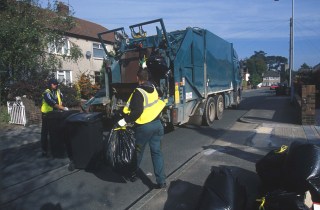
A data error by the Health and Safety Executive covering injuries in the waste and recycling sector means that accident rates for 2011/12 were actually up rather than down as it had previously stated.
Provisional statistics issued last month (October 2012) by the HSE showed a slight decrease in the number of injuries recorded in the waste and recycling sector for the 2011/12 financial year (see letsrecycle.com story).
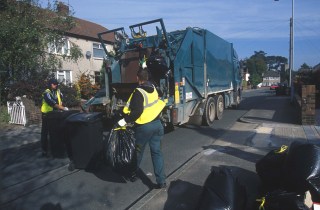
However, it has now emerged that a coding error by the HSE saw 314 waste-related injuries wrongly allocated to the heading Public administration and defence; compulsory social security instead of waste management.
Corrected
The HSE has now corrected the data which can be found in a report entitled Waste and recycling work related injuries and ill health, which offers detailed analysis of the injury rate for the waste industry.
The report shows that the number of major injuries covered by code SIC 38 waste collection, treatment, disposal activities andmaterials recovery has increased from 482 in 2010/11 to 495 in 2011/12 not fallen to 465 as the HSE previously said.
In addition, the number of over three-day injuries incidents which require an injured person to be away from work or unable to do their normal duty for more than three days increased from 1,967 in 2010/11 to 2,160 in 2011/12 not fallen to 1,876 as previously stated.
|
Fatalities (SIC 38) |
Major injuries (SIC 38) |
Over three-day injuries (SIC 38) |
|
|---|---|---|---|
| 2010/11 | 9 | 482 | 1,967 |
| 2011/12 (original) | 5 | 465 | 1,876 |
|
2011/12 (amended) |
5 | 495 | 2,160 |
Table showing original and amended figures for 2011/12
The error was flagged up in a footnoteto the HSEs main statistics, which shows the number of injuries occurring in all sectors across Britain. The HSE said: Around 300 waste-related injuries reported in 2011/12 have been incorrectly allocated to ‘Public administration and defence; compulsory social security’ (SIC 84), mainly because the injured person was employed by a local authority. These should have been included in the injury numbers for ‘Waste collection, treatment, disposal activities and materials recovery’ (SIC38).
10% were major injuries and the remainder were over-3-day injuries. No fatal injuries were included. Unfortunately, this error was detected too late to be corrected in the provisional published dataset. It will be corrected when the tables are finalised in 2013.
Trends
Looking at the overall waste and recycling sector which includes remediation and waste management and the wholesale of scrap the HSE said: The waste and recycling sector recorded 553 major injuries in 2011/12 down from 588 in 2010/11 and 2577 over-3-day injuries, up slightly from 2530 in 2010/11. The total number of reported non-fatal injuries remained almost the same with 3,130 in 2011/12 and 3,118 for 2010/11.
Despite the increase in the number of injuries in 2011/12 the HSE said the overall trend for injury rates is downward. The major injury rate for the waste and recycling industry per 100,000 workers has decreased from 500 in 2004/05 to 398 in 2011/12.
Related Links
The HSE said in the report: There is a general downward trend in the rate of injury over the last eight years, but there is also significant year-to-year variation, especially in the number of fatalities. Injury numbers have been falling for the last four years or longer.”
Despite the downward trend, waste and recycling still remains a high risk industry. It accounts for around 0.6% of employees in Britain but nearly 3% of reported injuries and over 4% of fatalities.

Register for free to comment