

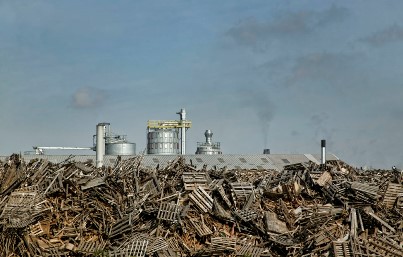
The 2015 summer season has been described by some as one of the ‘toughest’ periods for the sector in recent years, with little material moving around and gate fees rising very high for lower grade material – which is, of course, only if this material is being accepted at all.
Parts of the Midlands have even seen gate fees as high as £100 for lower grade material, although in parts of the South and North it is slightly lower, while in Scotland fees often remain almost non-existent.
Some operators, such as Hadfield Wood Recyclers, have this year been open in their condemnation of the Environment Agency’s storage restriction rules for waste wood material (see letsrecycle.com story).
Hadfield has been forced to close its gates to incoming lower grade material at its Manchester site due to the “unworkable” regulatory rules being put in place by the Agency.
And, with Hadfield being one of the UK’s largest wood recycling firms, the situation has had a wider impact on the rest of the UK markets.
One waste wood operator in the North East struggling with low margins told letsrecycle.com: “Although I understand the EA has to consider health and safety, the situation with Hadfield and others is crippling the supply chain.”
Stobart
Meanwhile, Stobart Biomass is another major waste wood supplier to have raised its gate fees recently, in part due to technical faults at three of its outlets for waste wood biomass fuel which it produces at its Pollington waste wood processing site in Yorkshire.
A spokesman for Stobart said one larger biomass facility and two smaller facilities had been temporarily shut down for maintenance, with early November the likely date for all issues to be resolved.
The spokesman said: “We fully expect these plants to be back up and running in the coming weeks.”
Stobart last month therefore notified some waste wood suppliers that, from October 1, its incoming gate fees had been increased to £60 per tonne for all grade C waste wood, while A and B grades were not being accepted at all.
As a result of temporary shutdowns, the outlet has halted all supply of material for at least one month, leaving Stobart’s Pollington site almost at capacity for storage. The facility has the capacity to process 150,000 tonnes of waste wood per year.
Gate fees, the company explained in an email to suppliers, have therefore been raised in order to prevent the site exceeding its permitted level of material storage and to enable Stobart to try and divert waste wood to other outlets.
Stobart said, on October 1, that it expected this situation to remain for at least one month while repairs are carried out. But, once these repairs are complete, the firm expects gate fees to fall back again.
Pollington biomass
Stobart Biomass took over the Pollington Pellet mill earlier this year after acquiring the facility from Veolia for £8.4 million after the latter offloaded its assets in the area, a spokesman for Veolia confirmed.
An adjacent biomass energy plant had also long been in the offing at Pollington, but both the energy plant and pellet mill – originally conceived by Dalkia before its takeover by Veolia – have now been mothballed, with a spokesman for the firm explaining that it had decided to “transfer its investment elsewhere”.
A spokesman for Veolia previously told letsrecycle.com in November 2014 that the project was “still on hold” (see letsrecycle.com story).
Veolia had used the Pollington mill to supply the biomass plant it operates at Dairy Crest’s creamery in Davidstow, Devon, as well as the existing former Dalkia biomass plant in Chilton, Durham.

Register for free to comment