


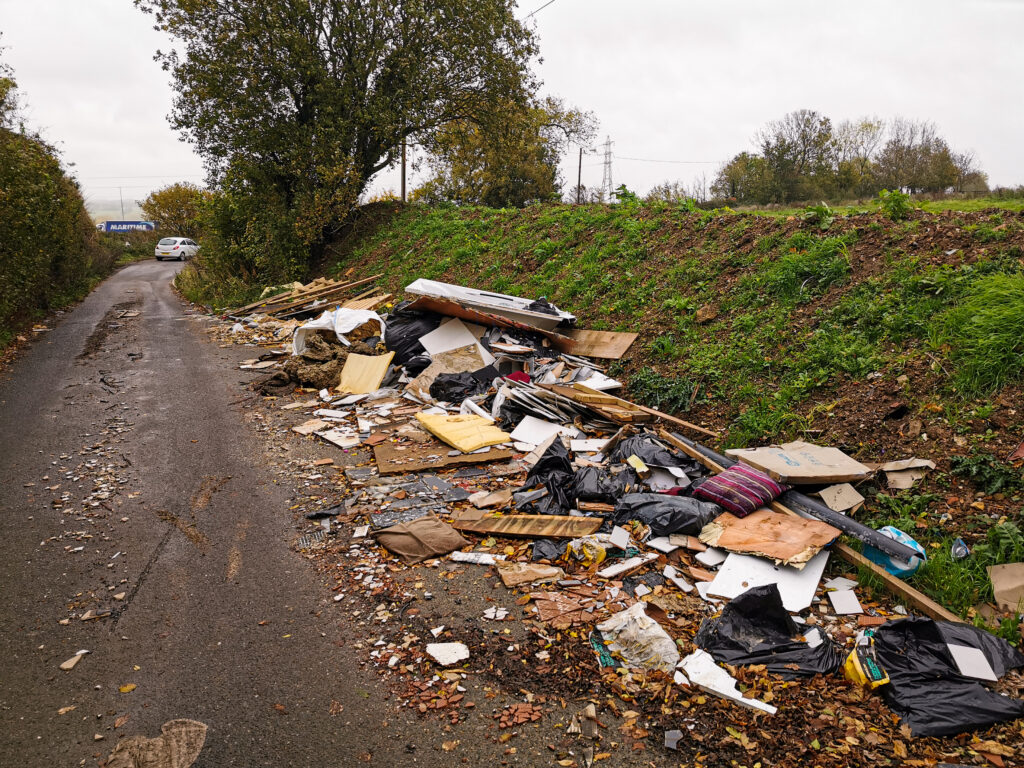
Under the proposals, offenders caught dumping waste illegally could be issued with so-called conditional cautions by local authorities, rather than being taken through the courts.
These cautions would require individuals to complete up to 20 hours of unpaid work, including cleaning streets, parks and even the exact locations where waste has been dumped.
In addition, councils would gain powers to recover clean-up costs directly from offenders, ensuring that the financial burden does not fall on taxpayers.
At present, fly-tippers can only be punished following a conviction, with penalties ranging from fines and community sentences to imprisonment.
The new approach is intended to accelerate enforcement, offering councils a more immediate route to tackling offences while also acting as a visible deterrent.
By forcing offenders to take responsibility for clearing waste, the government says the measures will help restore pride in local communities.
Waste Crime Action Plan
The measures will sit within the government’s upcoming Waste Crime Action Plan, which is expected to outline a “tougher approach” to tackling illegal waste activity.
Alongside the introduction of conditional cautions, the government plans to expand the powers of the Environment Agency under both the Police and Criminal Evidence Act and the Proceeds of Crime Act 2002.
This would enhance the agency’s ability to investigate and disrupt organised waste crime, including seizing assets linked to illegal activity.
Environment Secretary Emma Reynolds said: “If you dump rubbish on our streets, you will be joining a clean-up squad and picking up the bill, not the taxpayer.
“We are clamping down on these criminals, making sure those responsible clean up and pay up.
“This Government is handing both the Environment Agency and local authorities the power to boost waste crime enforcement, hand out tougher sentences and tackle illegal dumping faster.”
The announcement builds on a series of recent steps to strengthen enforcement.
Local authorities have already been encouraged to take tougher action against offenders, including crushing vehicles used in fly-tipping incidents, supported by new government guidance on pursuing prosecutions.
The government has also pointed to increased funding for councils, with £78 billion allocated to local authority budgets in England this year, as part of wider efforts to support frontline enforcement activity.
The fly-tipping challenge
The latest proposals come amid rising levels of enforcement activity against fly-tipping. Local authorities carried out around 572,000 enforcement actions in 2024/25, an 8% increase on the previous year.
This included the issuing of approximately 69,000 fixed penalty notices, up 9% year-on-year.
Despite this increase, fly-tipping remains a persistent issue across England, placing significant financial and environmental pressures on councils and communities.
