

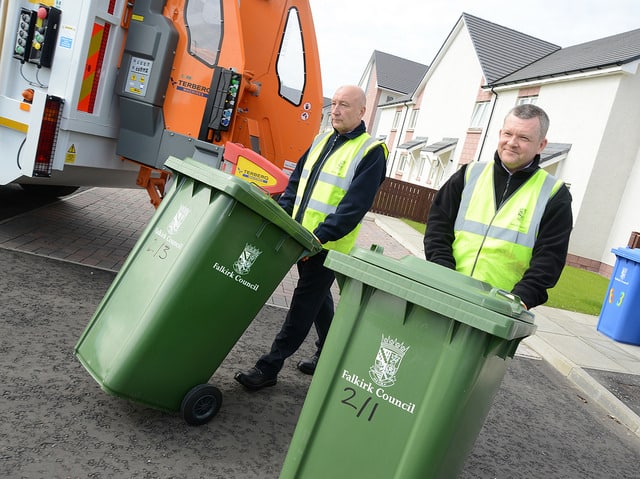
Falkirk council became the first authority to move its green bin residual waste collections to a three weekly service in May, when it switched from a fortnightly scheme for 18,000 homes in parts of Airth, Letham, Larbert, Stenhousemuir, Torwood, Boness, Carron and Carronshore (see letsrecycle.com story).
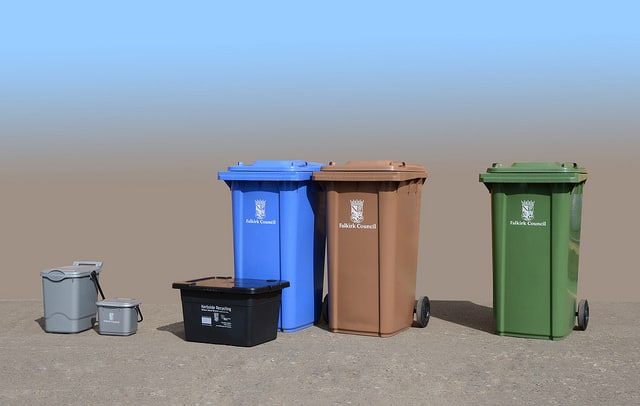
Food waste continues to be collected on a weekly basis, with dry recycling, textiles and garden waste collected fortnightly.
The authority is now rolling out the system to an additional 22,000 properties in the Banknock, Bonnybridge, Denny and Lionthorn districts, with the remaining 25,000 households in the borough to follow suit in March 2015.
Target
Scotland’s local authorities have been set a target to recycle 60% of waste by 2020, rising to 70% by 2025. Falkirk achieved a recycling rate of 53% in 2013.
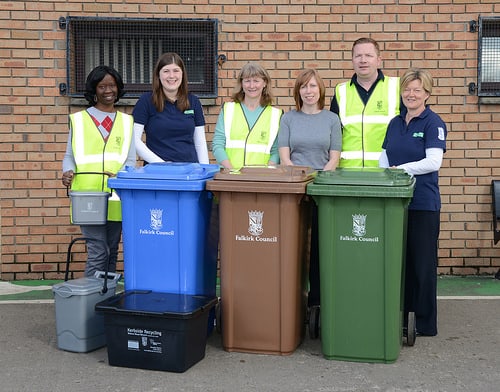
A report submitted to the council’s executive committee earlier in the year suggested that after the first two months of the new collection regime coming into effect, affected areas are producing around 2kg waste per household less than during the same period in 2013.
This has corresponded with a 29% increase in the volume of food waste collected, and a 6% increase in commingled dry recycling in the target areas.
However, the report warns that participation in the food waste collection service still only sits at around 30% and the council notes that areas where participation is lowest are among the areas where the largest volume of residual waste is collected.
Participation
Speaking to letsrecycle.com, Robin Baird, Falkirk’s waste strategy co-ordinator said that the council had been encouraged by the early results of the scheme, but said that improving participation in the available recycling services remains a priority.
“If the performance was mirrored across all households, we would see a reduction of 9,000 tonnes going to landfill. It could see the council reach 60% recycling. There are still opportunities to make that happen, such as increasing food waste participation.”
[testimonial id = “66” align=”right”]
He also stressed that a key to making the system work is not just focussing on the change from fortnightly to three-weekly collections for residual waste – rather to communicate with residents about the entire service being offered by the local authority.
“The area we cover is mostly urban, and demographically it is fairly standard. Every council needs to look at the situation they have, and take a holistic view of their services, looking at the whole system in its entirety.
“The question we have asked communities is ‘what is left within their non-recyclable bin?’ They don’t really tend to give an answer aside from nappies and AHP.
“They [residents] know that they have got three weeks to wait and they know that they need to be careful with what they throw away. It has allowed us to directly engage with residents and explain it.”
Communications
Communications with residents has been a key part of the roll out of the project – with community roadshows and door-to-door visits all carried out to inform residents of changes. Householders were also given leaflets and calendars informing them of collection schedules as well as a dedicated email address established for the general waste enquiries.
Three recycling advisers were employed by the council to aid householder engagement – with funding to support this coming from Zero Waste Scotland – while a recycling specialist was placed within the council’s contact centre to deal with an expected increase in telephone enquiries.
Recycling officers also accompanied crews on collection rounds to note where residual bins had been overfilled and to establish where the council could target its support to residents.
In spite of early success of the scheme Mr Baird remains cautious on the prospect of any savings accrued by the council as a result of the switch, and said that the new system focuses more on avoiding the cost of sending waste to landfill as well as the distribution of resources.
“We have to be very careful when we talk about savings. That comes purely from savings on landfill. With the landfill tax coming up to stand still on costs we have to divert more waste from landfill. The cost of landfill is now approaching £100 per tonne.
“If it costs you £2 million a year to landfill food waste or £2 million for collecting food waste for treatment, that might employ 15 more people rather than just spending £2 million on a hole in the ground. It is about cost avoidance and relocating resources.”
Mr Baird also revealed that Falkirk has been approached by a number of local authorities from around the UK for insight into the three weekly residual waste regime and believes many are likely to follow the move in future. To date, Falkirk, Bury and Gwynedd council have switched to a three-weekly service for black bag waste.


Register for free to comment