


This was the message from compliance schemes, reprocessors and the chair of the Advisory Committee on Packaging, who together have painted a picture of the market trends and regulatory changes the sector might expect to see over the next 12 months.

The comments come in the wake of a PRN market which was volatile towards the end of 2015, as some schemes raced to meet potential shortfalls across a number of material streams including (energy) recovery and plastics.
And, with the fourth quarter compliance period not due to end until 31 January 2016 a picture of whether obligated businesses and the compliance schemes have been successful in their aims is still to emerge.
Plastics
After a promising start to the year for plastics, weaker demand from China and the failure of some plastics recycling businesses in the UK led to volatility in the third quarter of 2015 in the PRN market with PRN prices swinging between £45-67 per tonne at the end of December.
Whether the situation will carry over into 2016 depends largely on the outcome of the government’s consultation on revising the plastics packaging target – which is scheduled to rise to 52% this year.
However, it appears increasingly likely that the target will be revised down to 48-49 – and then increasing by 1% each year until 2020. A decision is expected in the Chancellor’s Spring Budget.
Duncan Simpson director of sales and marketing at Valpak, said: “At present the work carried out under the Valpak Plastic Flow research suggests that UK is currently achieving higher recycling than previously thought, thus giving scope to reduce the target whilst still achieving the government’s intentions. Lowering the target would mean less likelihood of excessive costs.”
Mr Simpson continued: “A more gradual approach over several years and aligning with the proposed targets regime set out in the EU Circular Economy package is likely to lead to a more cost-effective framework for future targets to work towards. It also gives a better time horizon of targets for producers and reprocessors to plan around due to the longer term certainty and visibility of targets.”
Matthew Manning, sales manager at ecosurety, agreed with this view on plastics. He said: “For 2016, one of the biggest influences will be the result of the plastics consultation which, like the outcome of the 2014 glass consultation, should result in decreased pressure on the plastics market leading to lower PRN prices for producers.”
Jessica Baker, of polythene recycler Chase Plastics, said she welcomed the consultation – but argued further revision of the PRN system was needed to create a ‘level playing field’ for UK-based reprocessors.
She said: “The price of virgin polymer is down and is likely to stay down. It would appear it is dangerous for the UK to rely so heavy on the export markets given uncertainty around China. I want to see targets split between full process and export. At the moment two people are being treated exactly the same where one has to do half the job.”
Glass
Defra is also consulting on the glass packaging target, though the material performed well throughout 2015 while producers look set to comfortably meet the obligation. The glass target was previously revised down to 75% from 81% in 2014, and is due to reach 77% this year.
Recovery
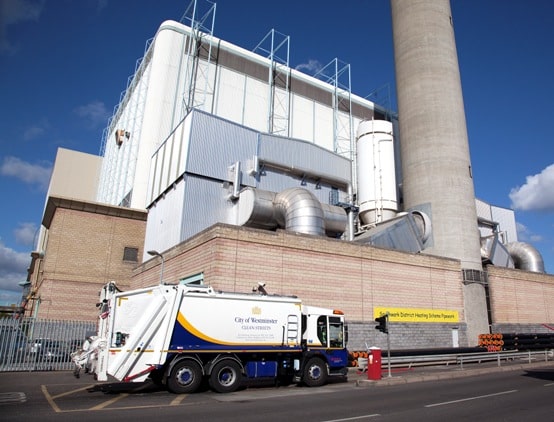
One area that remains a concern for producers is recovery, with as few as seven operational energy from waste plants in England able to issue PRNs as of November 2015. The Environment Agency ruling – that only incinerators with R1 status are able to issue recovery PRNs – is unlikely to change in 2016.
While unprecedented demand for recovery PRNs could see more energy from waste plants become accredited, the obligation can still be offset by paper and wood PRNs – which have in the past been used to meet the shortfall.
As a result, paper PRNs rose as high as £6 per tonne by the end of the year, with wood PRNs trading at between £10-22 per tonne.
Paul Van Danzig, sales & marketing director at compliance scheme Wastepack Ltd, said: “With wood we had enough material to meet the obligation and I think it is unlikely that scenario will happen again in 2016. It’s a balancing act to make sure those issuing PRNs are acting responsibly but not making it so difficult that people stop becoming accredited. Recovery accreditation should maybe be more of a tiered approach.”
Referendum
The scheme concludes that while most other materials are likely to be “business as usual” in 2016, the wider political issue of the EU referendum has the potential to impact the packaging recycling regime.
Targets set for 2020 and beyond will depend largely on the outcome of the referendum, which will dictate whether the UK needs to set its own ambitions in line with the 70% by 2030 packaging recycling target likely to be ratified by the European Commission.
Options
“We need to start to consider recommendations based on the EU proposals. Defra will be looking at extending targets out for 2020 and that will be put to consultation”
Phil Conran
ACP chair

Phil Conran, chair of the Advisory Committee on Packaging (ACP), claimed the Defra-backed group would need to consider ‘all the options’ needed to meet future targets.
On the group’s work in 2016, he said: “We need to start to consider recommendations based on the EU proposals. Defra will be looking at extending targets out for 2020 and that will be put to consultation. There’s still a lot of concern in the plastics industry over the imbalance in PRN issue for domestic reprocessing and export.”
He added: “There will be some future tinkering with some of the technical aspects, such as simplifying accreditation processes. We will also look at a more balanced approach on evidence and how we can get a more consistent level of enforcement.”

Register for free to comment