


The AD plant will process up to 15,000 tonnes of organic waste, such as food waste, and 6,000 tonnes of pig slurry every year. Feedstock for the plant will come from Viridors Somerset operations, New Earth Solutions and Dorset county council. Eco was awarded an eight-year contract by the council in 2008 to handle food waste, wood and green waste from across the county.
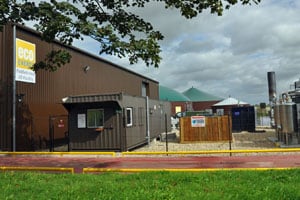
The electricity and gas created by the process will be used by neighbouring company Mole Valley Farmers Dorchester Feed Mill. Eco said the mill will also use solar energy, making it the first feed mill in the country to be powered completely by renewable energy. The digestate from the AD process will be used as an agricultural fertiliser on local farmland.
The Piddlehinton facility represents Ecos first move into the renewable energy sector.
The company said: This plant, which was delivered on time and within budget, is Ecos first move into renewable energy. Creating two jobs, recycling 15,000 tonnes of food waste, and saving 2,000 tonnes of carbon each year, the Piddlehinton AD project has been a great success.
The facility was opened on Friday (September 21) by Councillor Hilary Cox, chairman of the Dorset Waste Partnership Joint Committee, who said the facility was an exciting new resource for the county.
Cllr Cox said: I’m absolutely chuffed to see this plant up and running, providing renewable energy from what were previously food scraps.
Trelawney Dampney, Ecos managing director, added: This is a highly efficient plant and I believe will act as a blueprint for future resource projects.
Parley
Eco is looking to expand further into the renewable energy field and has also submitted a planning application for a second AD plant at its existing site in Parley. If granted, the plant will treat up to 45,000 tonnes of food waste every year. Eco said it hopes the plant will be operational by 2015.
In addition, the company has also been granted planning permission for a 14 million biomass facility at the Parley site. Construction of the facility is expected to begin early next year, with Eco hoping the plant will be operational by mid-2014.
Related Links
Once complete, it will have the capacity to process up to 25,000 tonnes of waste wood every year, generating three megawatts of electricity.
Discussing the companys future plans, Mr Dampney said: We are about maximising the value at the back end. That is why we are moving into energy because it is more efficient than just making compost. We will still do composting but we will always be looking to exploit energy.


Register for free to comment