

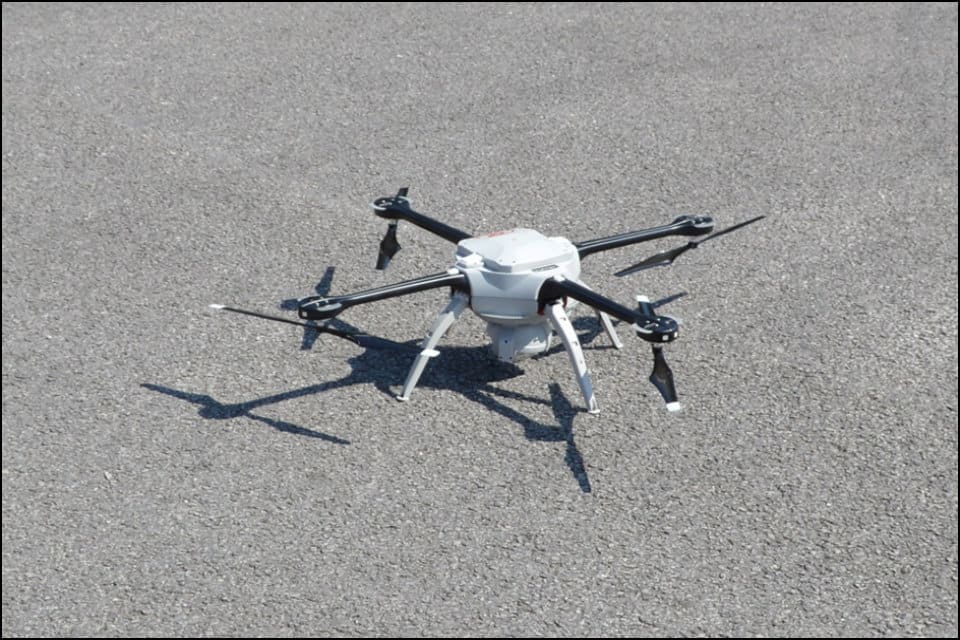
Since summer 2015, the Agency has partnered with the Manchester Fire and Rescue Service to use its remote-controlled Aerial Imagery Reconnaissance (AIR) unit to view waste sites from the air.
According to the Agency, the AIR unit can take pictures and video while also detecting elevated heat sources within waste piles, and waste operators in the region are informed beforehand if their sites are to be monitored.
The AIR unit is used to identify the areas within waste piles which are at a higher risk of self-igniting and have the potential to cause fires, which the Agency also warns have a greater danger of breaking out at waste sites on bonfire night (November 5).
Gordon Whitaker, environment manager at the EA, said: “Fires at waste sites are of increasing concern, particularly around bonfire night. There is always a risk of pollution to watercourses and the local environment.
“Everyone who disposes of waste has a duty of care to ensure their waste is handled appropriately. If you don’t dispose of your waste correctly you risk being prosecuted and fined. If you run a business or other organisation this could seriously damage your reputation.”
Bonfire night
In addition, the Agency is warning the general public about what types of materials are safe to burn as part of fireworks celebrations this year, and to avoid putting illegal waste on bonfires.
While “small amounts” of paper, leaves, wood and cardboard can be acceptable for burning, the likes of treated wood, tyres, plastic, rubber and oil can “pose serious risks to health and the environment”, according to the Agency.
Mr Whitaker added: “Many people don’t consider the implications of dumping illegal waste on their bonfire, so it is essential that it remains secure. If you’re organising a bonfire night this week, make sure you know where the bonfire material has come from and that it is suitable.”
Fire regulation
The waste and recycling sector has come under the spotlight in recent years with regards to site fires, and the Agency has issued updated guidance on waste stack sizes and distances across the industry.
However, the EA’s Fire Prevention Plan (FPP) guidance issued earlier this year has angered many wood and tyre recyclers for what has been described as “unworkable” restrictions included in the document (see letsrecycle.com story).
The Wood Recyclers Association (WRA) is working with fire services and the Environment Agency to carry out tests to gain scientific evidence on what causes fires in the waste sector, but these tests at Stobart’s site in Pollington, Yorkshire, have been delayed due to a recent waste fire at nearby Great Heck (see letsrecycle.com story).

Register for free to comment