

However, the Agency warned that some caution should be taken from the provisional statistics as they are “broad approvals”, providing “an inaccurate overestimate of the actual exports”.
Published last week (23 May), the data outlines the provisional amount of RDF exported from England during the first four months of this year, which is 476,869 tonnes. This is down 16.5% from the same period in 2021, when the exported amount was 555,747 tonnes.
The numbers continue the trend of a steady decline of exports from England. In 2021, RDF exports fell by 8% from the previous year.
This has been put down to “a myriad of factors including the Covid-19 pandemic, import taxes, rise in domestic energy from waste plants”.
Exporters
From January to April 2022, Geminor was the largest exporter with 83,504 tonnes. This is down by 12.3% from 95,329 tonnes during the same period in 2021.
Bertling Enviro AB was second with 72,634 tonnes. This is a significant increase of 47.7% for the company, up from 49,164 tonnes last year.
The third largest exporter was Andusia Recovered Fuels Ltd. The company’s figures were broadly similar to 2021, recording a 1.6% increase for 2022. In 2021, Andusia exported 65,489 tonnes of RDF, which has risen to 66,512 tonnes this year.
Decline
The steady decline in RDF exports can also be seen when comparing the statistics by month.
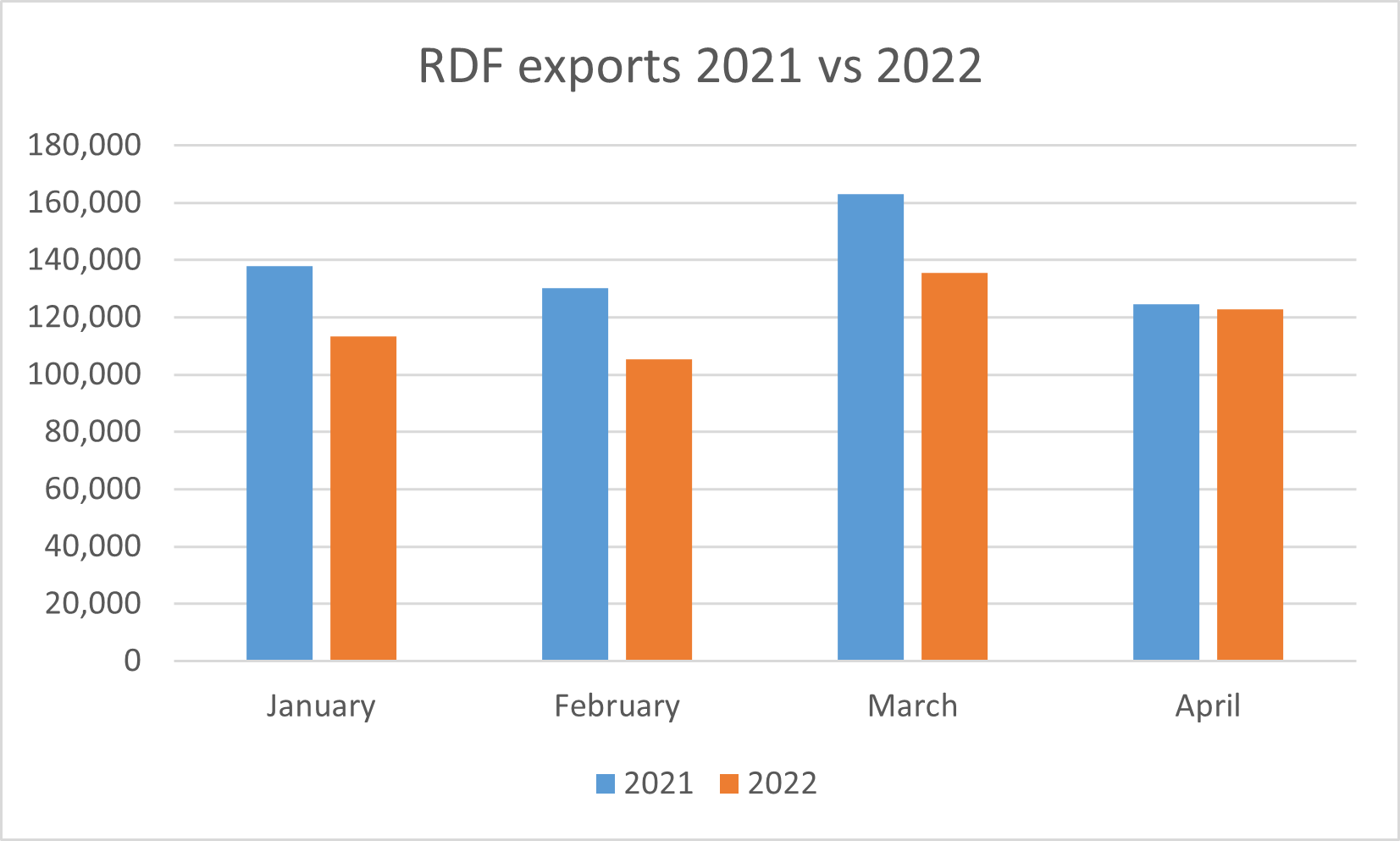
In January this year, exports fell by 17.7% down from 137,933 in January 2021 to 113,453. February 2022 has seen a decline of 19.2% from 130,339 tonnes exported last year to 105,252.
In March the figures were roughly similar – a decrease of 16.9% from 162,994 in 2021 to 135,506 in 2022. The difference in April is at 1.5% from 124,481 tonnes in 2021 to 122,658 this year.
‘Bottoming out’
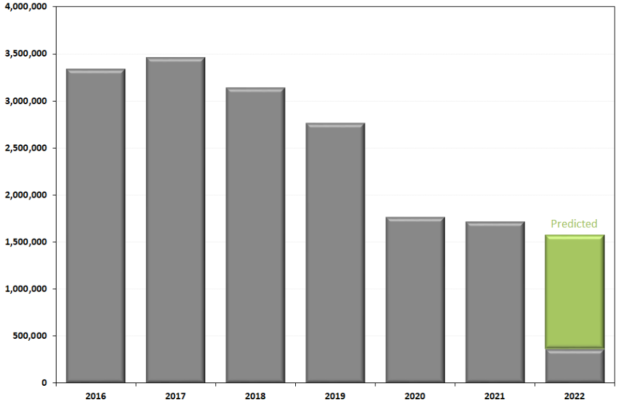
Geminor reacted to the data by pointing to the April statistics, suggesting that this shows the fall in exports is “bottoming out” and predicted that the market will stabilise at around 1.5 million tonnes per year.
James Maiden, country manager for the UK at Geminor, explained that the data, “in addition to feedback from our offices around Europe”, make the company believe that the decline in exports is starting to level off.
He said there has been a “considerable change” in the UK market since 2018, when the annual export from England was just over 3 million tonnes. Explaining that this was largely due to the “rapidly growing” domestic energy from waste market, he added: “At the same time, Covid, Brexit, and the ongoing transport challenges brought about by the war in Ukraine have made export more expensive.”
Mr Maiden continued: “A more turbulent market and less export volumes from the UK is leading to more stockpiling of secondary fuels this season. Since export volumes are not registered in the Environment Agency datasets before the RDF is verifiably recovered, some of the shipped volumes are still not part of the statistics.
“Our job now will be to secure the volumes of the right quality for offtakers overseas, but also for our offtakers within the UK.”
Prediction
The consultancy firm Footprint Services compiled a report on the data, and estimated that exports will remain around 1.5 million tonnes in 2022, broadly similar with the previous two years.
The consultancy also predicted a small rise in some exports in the coming months.

Register for free to comment