


The New Earth plant in Poole is currently in the process of increasing capacity from 12,000 tonnes to 50,000 tonnes.
”If it does turn out that it includes the majority of former foodstuffs, this may affect the development of four other plants we are looking at “
– Chris Hawkins, New Earth
It has just been given approval by the State Veterinary Service to compost food waste and was expecting much of its feedstock to come from manufacturers and retailers, as a result of the proposed ban on former foodstuffs going to landfill from 1 January, 2006.
Lifting ban
But earlier this week Defra announced that the Commission was intending not to include 'treated' former foodstuffs in the ban (see letsrecycle.com story)
The ban was to come as part of the Animal By-Product Regulations.
An official list of 'treated' former foodstuffs is still to be drawn up but is expected to include foods such as sausage rolls and ready meals which are passed their sell-by date.
There has been concern from the waste industry that investments and planning for new capacity for former foodstuffs will be now be crushed.
Stranded assets
The Environmental Services Association said a lot of companies would have stranded assets and the chairman of The Composting Association, Trelawney Dampney, expressed his anger, saying that money was likely to be lost by composters.
“How can we be expected to make capital investment when this kind of thing keeps happening? There are companies that have invested millions of pounds for this,” he said.
The operations manager at New Earth, Chris Hawkins, said if 'treated' did include the majority of former foodstuffs, the new plant would still be able to secure enough feedstock. However Mr Hawkins said the development of any future New Earth sites may be affected.
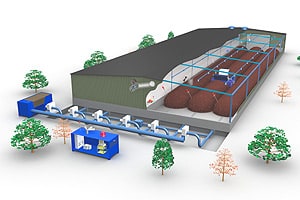 An impression of how the finished plant will look |
Feedstock
“There is still plenty of waste out there and we believe that rendering capacity is filling up and charges a higher gate fee. There are still not many Category 3 plants for food waste around,” he said.
The original plan was for New Earth to fill a significant amount of capacity through food feedstocks from commercial companies. The company was also scoping out a further 10 sites in the UK, with a view to setting up another five treatment facilities over the next two years.
“We knew that Defra was looking at certain thing which may not pose a risk to human and animal health, such as milk and honey products, being scrapped from the ban. But if it does turn out that treated includes the majority of former foodstuffs, this may affect the development of four other plants we are looking at,” said Mr Hawkins.
BMT
The New Earth plant is also operating as a BMT – biological, mechanical separation facility, processing residual household waste from Bournemouth council.
Mr Hawkins said: “We will speak to our food brokers Envirotech and wait for more news from Defra, but we have other avenues, such as the residual waste, if the lifting of the ban turns out to be on most former foodstuffs.”

Subscribe for free