

From Wednesday December 3 2014, Derby city council will roll out a trial weekly black bin collection for an additional eight streets in the Aboretum ward, and also introduce this change to 18 streets in Normanton.
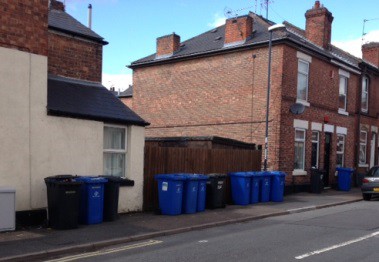
The council claims these areas – including the likes of Princes Street, Byron Street and Cameron Road – have low recycling rates, which “potentially means large quantities of contaminated ‘recycling’ material being sent to landfill”.
Derby city council is forced to pay charges from its recycling processing contractor Biffa when loads of material collected from households have to be rejected due to contamination.
As such, blue wheeled commingled dry recycling bins will be removed from doorsteps on these streets, with the final collection taking place on November 26. In their place, three additional recycling sites are to be introduced at nearby locations “giving residents the option to recycle with ease”.
Collection
According to the council, the new service in these limited areas “will mean cleaner streets and help residents to keep track of their waste collections”.
It follows the removal of recycling bins and an increase in residual collection frequency on several streets in the Mackworth ward of the city earlier this year (see letsrecycle.com story). Recycling collections were also cut for around 3,300 properties in the nearby Aboretum ward in 2013 (see letsrecycle.com story).
According to the council, the trial in Aboretum resulted in streets being less cluttered and the amount of side waste being dumped in these streets reduced.
The council also said residents in Aboretum found presenting just residual waste for collection “much easier to understand”.
The Household Waste Recycling Act 2003 requires all English waste collection authorities to collect at least two types of recyclable waste from all households in their area unless the costs are unreasonably high.
[testimonial id = “96” align=”right”]
However, Derby councillor for the Mackworth ward, Paul Pegg previously told letsrecycle.com that the council had “special dispensation” to remove recycling services and was not breaking the law by doing so for some residents (see letsrecycle.com story).
Engagement
Most areas of Derby receive alternate-weekly collections of dry recycling and residual waste, but the council said that engagement work with communities in areas with low recycling rates has “had little impact”.
Derby city councillor Asaf Afzal, cabinet member for neighbourhoods and streetpride, said: “Our neighbourhood teams work tirelessly to engage with local residents, whether that’s through leafleting, door stopping or community meetings, but this has had little impact on attitudes towards recycling.
“To make a significant difference we need to act now which is why we have come to a decision to use the weekly black bin collection in these areas. This is a system that is very easy to understand and should allow people to get into the routine of regularly filling their bin and putting it out and bringing it in when they need to.
He added: “This is only one element to the wider picture. We need to make sure our communities are working together to keep their streets clean. We need to take pride in the area we live in and talk to our neighbours if we think they might need a little helping hand when it comes to abiding by the rules.”
Criticism
Campaigners have criticised the removal of recycling services for impacting on recycling rates in the city and encouraging fly tipping.
Anti-incineration campaigner Simon Bacon said there was “no justification” for the removal of more recycling collections as “blue bin recycling end contamination was less than 6% in recent times”.
He said: “Removal of recycling service in Derby will cost Derby serious money – at least £100 per tonne more than recycling.”

Register for free to comment