

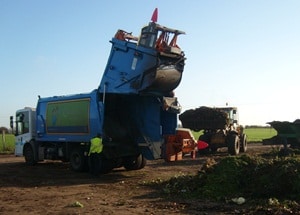
The composting industry has called on the government for help in its bid to cut the levels of contamination found in some local authority green waste collection streams.
The industry has suggested that the weight of contaminants received in green waste collections should always be excluded from recycling tonnages.
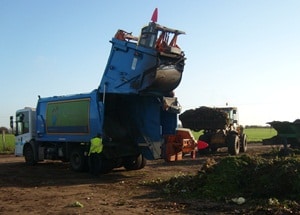
Concerns about contamination in organic waste collects were relayed to Defra by the Association for Organics Recycling (AfOR) in a meeting earlier this month (May 2).
Contaminants
AfOR says that its members have raised concerns that organic waste collected by local authorities often contain high levels of contaminants such as plastics and cardboard which do not biodegrade, are costly to remove and make it more difficult to produce compost which meets the PAS 100 standard.
The matter is proving sensitive in some circumstances as some organics recyclers feel under pressure not to be too strict about other materials being received with green waste.
The Association is calling for input material tonnages claimed as recycled only to include source-segregated materials suitable for processing through composting or anaerobic digestion that can be turned into quality products.
Reporting
It has suggested to Defra that the quality of green waste collected and composted should be reported by local authorities through the Waste Data Flow system and counted towards Local recycling rates, so that rejected materials are not also counted as recycled.
AfORs senior technical officer Dr Kiara Zennaro, who attended the meeting with Defra, said: Defra understands the concerns that AfOR has raised and said they will consider our feedback. The key for AfOR is to ensure that Defra implements a mechanism, based on both a carrot and stick approach which will assist in reducing the amount of contaminant received at biowaste sites, currently the levels are unacceptably high and continue to present significant regulatory and quality concerns.
If Local authorities are to report the types of material sent to biowaste facilities for recycling we think the input material to the site should deduct any rejected material that is not compostable and should not be counted towards recycling as we are of aware of some sites dealing with up to 25% of the inputs as not being suitable for biological treatment.
Guidance
AfOR says it is fundamental that future guidance for local authorities on calculating recycling rates includes a method to encourage them to reduce contaminants in green waste collected for recycling.
New End of Waste criteria are currently being developed by the European Commission, which will determine when compost is of a high enough quality not to be considered waste, and according to Dr Zennaro, meeting this standard could be crucial for determining if organic waste can be classed as recycled.
Related Links
AfOR set up a working group in October 2010 to raise awareness amongst local authorities of the need to raise the quality of organic waste collected. Dr Zennaro also revealed that the Association will shortly be issuing a protocol for organics recyclers and local authorities to check the levels of contaminants in green waste loads and to monitor biowaste quality.


Register for free to comment