


A three-day hearing has been scheduled at Cardiff Administrative Court for February 26-28 2013 to hear a case in which it is argued that Defra and the Welsh Government have wrongly transposed the requirements of the EU Waste Framework Directive.
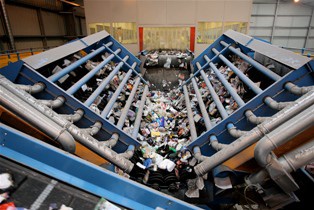
Should it be resolved at the end of February, local authorities and waste management should gain more clarity over the collecting of recyclables in a commingled process for sorting at a materials recycling facility. While some consider that Defra and the European Commission have made it clear that commingling is acceptable under the revised directive, others believe that the UK has not interpreted the legislation correctly.

The Judicial Review has been brought by six claimants against Defra and the Welsh Government over the Waste (England and Wales) Regulations 2011, and the Waste (England and Wales) (Amendment) Regulations 2012 and how these transpose the requirements of the EU Waste Framework Directive.
The claimants are a group of six reprocessors who are members of the Campaign for Real Recycling. They argue that the Directives requirement for councils to introduce separate collections of glass, metals, paper and plastics by 2015 should exclude those where materials are mixed together or commingled. They are therefore challenging the wording used by Defra in its regulations.
However, Defra has said it is keen for councils to determine how they collect their waste and wants to maintain flexibility.
Regulations
In order to ward off an initial legal challenge in 2011, Defra and the Welsh Government slightly changed the regulations to revert more closely to the language of the directive. The amended regulations state (in regulation 13) that separate collections are only necessary where technically, environmentally and economically practicable(TEEP).

However the claimants still believe the regulations are unsatisfactory and have therefore restarted their legal challenge. The claimants include: glass reprocessor Ardagh Glass; paper recyclers DS Smith Paper Ltd, Palm Recycling Ltd and Smurfit Kappa Ltd; aluminium recycler Novelis UK Ltd and UK Recyclate Ltd, the social enterprise set up by CRR coordinator Andy Moore.
Hilary Harrison from Birmingham-based solicitors Anthony Collins, which represents the claimants, said: The regulations as they stand dont reflect the revised Waste Framework Directive… We would not proceed if we did not think we had a chance of success.
A spokesman for Defra said that the department hopes that the hearing will finally provide resolution on whether commingled collection would remain acceptable and provide some clarity for councils.
He said: Whilst recognising that it is a matter for the Court, Defra remains of the view that its regulations, as amended, are sufficient, and intends to defend them in court. We appreciate that local authorities want clarity over whether or not co-mingled collection will remain acceptable, and assistance in order to understand their obligations under the Directive. We would therefore welcome resolution of the Judicial Review at the forthcoming hearing.
Court
The spokeswoman for Cardiff Administrative Court explained that the judge at the hearing in February would be Mr Justice Hickinbottom who had been assigned to the original Judicial Review hearing in December 2011 before it was postponed.
Related Links
Waste (England and Wales) Regulations 2011
Interested parties who are set to submit evidence include the ESA, the trade association for the waste management sector, alongside the Local Government Association and Welsh Local Government Association.
The LGA is keen to protect the principle that councils should be able to collect waste in the method most suitable for their area and to bring the case to a quick conclusion. Its members are concerned that they may be open to legal challenge.
While the court case is important, of equal importance will be guidance set to be produced by Defra following the case, which will include the definition of TEEP.



Register for free to comment