
But, a number of actions to help develop markets for digestate, build skills and improve regulation are yet to be carried out.
The messages were contained within the Anaerobic Digestion Strategy and Action Plan Annual Report on Progress 2011/12 published by the Department for Environment, Food and Rural Affairs (Defra).
Writing in the foreword to the report, recycling minister Lord Taylor and energy minister Gregory Barker said: We are pleased to publish this report which highlights the significant progress that has been made in the first year since the Anaerobic Digestion Strategy and Action Plan was launched. During that time the industry has continued to grow: the number of AD plants has risen by more than a third and its capacity has doubled. There are also many proposals and significant investment in the pipeline.
Nonetheless, there remain challenges and barriers to be overcome if this growing industry is to achieve its potential in producing renewable energy, treating our organic waste, and creating new sources of renewable bio-fertiliser. We remain committed to helping the industry to achieve this potential and contribute to our green economy.
Plan
In the AD Strategy and Action Plan, the government did not set itself any particular targets for increasing anaerobic digestion capacity but instead looked to address some of the barriers to the uptake of the technology in order to help realise the Coalition Agreement aim of generating a huge increase in the generation of energy from waste through anaerobic digestion.
The eight major areas of work in the Action Plan were: Improving understanding of the AD baseline; building UK skills; building markets for digestate; raising awareness of AD; building markets for biomethane and transport fuels; AD in the rural community; finance; and, regulation.
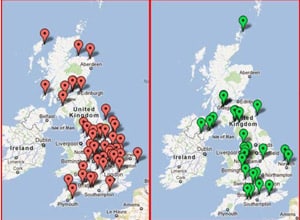
Charting progress to date, the report notes that the number of plants has risen by a third in the year, while capacity has doubled. It notes that there are currently 78 AD plants operating outside the water industry in the UK, up from 54 a year ago. Of these, 48 are waste-fed while 29 are farm-fed. A further 100 plants have planning permission.
The report notes: There has been very good progress under the Action Plan with many actions being delivered on schedule. Although in some cases there have been delays for example where the original deadlines in the Action Plan proved overly ambitious, or where there have been funding constraints – there has been good progress in the most critical areas. In total 21 of the 56 actions are now complete, 28 are in progress, and 7 are classified as ongoing actions.
The report says that the highlights of the past year include:
- Launch of the 10m Anaerobic Digestion Loan Fund operated by WRAP, and the offer of the first loan under the Fund
- Strong industry response to WRAPs Driving Innovation in AD programme, resulting in 19 projects being funded to feasibility stage
- A new 9.5m programme from the Department for Transport for low carbon trucks and re-fuelling infrastructure
- Good progress on reducing the costs of injecting biomethane to the grid
- New permitted development rights for on-farm AD, reducing the need for planning permission where the plant meets the specified size and feedstock criteria
- The subsidy for AD under the Feed in Tariffs scheme was increased for small scale AD plants, and the Renewable Heat Incentive was launched providing another route for financial support of AD projects. The Department of Energy and Climate Change also reviewed the Renewables Obligation and the Feed in Tariffs scheme during the year.
- Launch of new trials looking at alternative markets for digestate, for example for landscaping and regeneration
However, the report says that there are 28 out of a total of 56 actions outstanding, most of which relate to developing safe and secure markets for digestate, skills and regulation.
Related Links
This includes work such as: obtaining and publishing empirical evidence on the benefits of different kinds of digestate for different markets; scoping the potential for a framework where demonstration/accreditation competence is key to acquiring financial investment and promoting to industry the benefits of schemes which enable and encourage the use of biomethane injected into the grid.
The report says: Work is underway to progress all these actions. Twenty five of the remaining actions will be completed within the next year, while three of them represent longer term tasks. Two of the longer term actions are part of WRAPs extensive programme on building markets for digestate and one action is looking into the regulatory tools for the delivery of the EU Industrial Emissions Directive.

Register for free to comment