

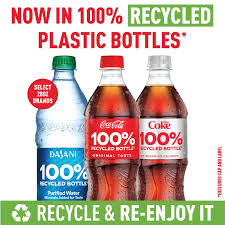
The complaint centres on what they allege are misleading ‘100% recycled’ and ‘100% recyclable’ claims printed on plastic water bottles sold throughout Europe.
The claim is often made as many drinks companies use 100% recycled plastic in their products and plastic is widely recyclable in Europe at the kerbside or through return systems.
The EU consumer protection organisation BEUC (Bureau Européen des Unions de Consommateurs), with the support of ClientEarth and ECOS (Environmental Coalition on Standards), has formally submitted a complaint to the European Commission and the Consumer Protection Cooperation Network.
The complaint accuses the companies of potentially infringing consumer protection laws on a broad scale.
The claims, frequently found on plastic water bottles, have raised concerns because they are often “factually inaccurate”, the group said. It added that critics argue that these statements imply that plastic bottles can be recycled infinitely in a circular manner.
A statement from the group said that it feels these assertions, “often accompanied by green imagery and generic environmental slogans, might lead consumers to perceive single-use plastic bottles as an environmentally friendly choice”.
Justin Wilkes, executive director at environmental coalition on standards (ECOS) said: “‘100% recycled’ and ‘100% recyclable’ plastic bottles are not technically feasible, and such labels can be misleading. We need reliable information on the level of recycled plastics in our bottles.
“Policymakers must set clear rules on recycled content that are implemented by standardised reliable methodologies, putting an end to the wild west of green claims.”
Recyclability
The recyclability of a plastic water bottle depends on local recycling infrastructure when it enters the system, not solely on the bottle itself, BEUC added.
It noted that in the EU, approximately 50% of plastic bottles are recycled, with only about 30% used for producing new bottles. The remaining plastic “often ends up in unrecyclable products, contributing to pollution and climate change”, it went on to say.
“Collectively, these claims may mislead European consumers into believing that single-use packaging is harmless to the environment, diverting attention from the need to reduce global plastic production.”
Impact
A spokesperson from the Coca Cola company said: “We care about the impact of every drink we sell and are committed to growing our business in the right way. We’re working to reduce the amount of plastic packaging we use, and we’re investing to collect and recycle the equivalent of the packaging we use.
“We only communicate messages on our packaging that can be substantiated, with any relevant qualifications clearly displayed to enable consumers to make informed choices. Some of our packaging carries messages to drive recycling awareness, including whether our packages are recyclable and if they are made from recycled content.”

Register for free to comment