

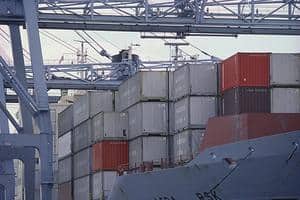
Bertling Enviro will from the start of next year begin collecting RDF from suppliers in Bristol and South Wales, sending the material in shipping containers from Southampton to an EfW plant in South Sweden.
The RDF will be processed to the specifications of its end user before being baled and wrapped before loading into the containers, which will carry with them the Transfrontier of Shipment (TFS) paperwork.
Using containers to ship the material, according to the firm, means less direct handling and a lower likelihood of damage to the bales. A mobile ramp and forklift will be used to load and unload the bales, with material shipped on a weekly basis.
The deal, which runs until the end of 2018, means that Bertling Enviro – which is part of the Hamburg-based Bertling Group – now has eight contracted suppliers of RDF in the UK and three contracted receivers in Sweden.
Warren Freimanis, sales and development director at Bertling Enviro, said: “We have exported almost 50,000 tonnes over the last year to various outlets in Sweden and our concept of using shipping containers has been welcomed by the Swedish receivers. We can offer our customers a just in time solution and the benefit of containers is that handling on the bales is heavily reduced.
“We have carefully selected our UK suppliers to ensure that the RDF being produced meets specification and that quality in the product is achieved all the time. The containers we use require no cleaning after discharge due to the quality of the bales.”
RDF
With exports of RDF from England and Wales now close to 2.5 million tonnes annually, the Department for the Environment, Food and Rural Affairs (Defra) is currently drawing up a ‘concise’ definition for RDF, which it describes as “a fuel produced from residual waste that meets an end user contractual specification for recovery at an energy from waste facility”.
Following a call for evidence on the UK’s RDF market in March 2014, the Department said it would develop a written definition of RDF and standards for its treatment, but intended to leave precise specifications for composition of the material up to end-users (see letsrecycle.com story).

Register for free to comment