


It also explains how schemes will be expected to work with battery producers, retailers and local authorities to ensure that they collect sufficient waste portable batteries to meet their members' obligations under the EU Batteries Directive.
And, it clarifies key issues which had raised concerns within the sector, and in particular the responsibility that battery compliance schemes have to collect batteries from any retailer, and not just those they have contracts in place with, as well as the role that evidence trading will play in the early stages of the UK system.
Approval
Prospective compliance schemes were given the formal go-ahead to begin the approval process when the regulations came into force last Tuesday (see letsrecycle.com story), and the guidance outlines the deadlines they need to meet to receive approval, as well as the steps producers must take to join a scheme for the 2010 compliance period.
These include:
May 31 2009 – deadline for prospective schemes to submit applications
August 31 2009 – deadline for prospective schemes to submit any additional information requested by the agencies
September 30 2009 – environment agencies issue decision on which schemes have been approved
October 15 2009 – deadline for producers placing more than one tonne a year of batteries onto the market to join a compliance scheme
October 31 2009 – deadline for schemes to register members with the agencies (must confirm membership in subsequent years)
In a move similar to that using in the waste electronic and electrical equipment (WEEE) system, schemes will have to submit an operational plan as part of the approval process.
This will be expected to include details of how the scheme will meet its members' collection and recycling responsibilities for the next three years, as well as its responsibility under the regulations to fund battery recycling publicity.
In an apparent bid to avoid the over- and under-collection of evidence – and subsequent protracted trading negotiations – that have occurred in the WEEE system, the guidance sets a ceiling on the amount of this that can take place with batteries.
“The Government accepts that it will be difficult for schemes to match precisely their collection networks and their obligations, especially in the first couple of years,” it explains.
“However, we expect that a scheme should not over or under collect against their obligations by more than 10%,” it adds, as well as stating that it expects evidence trading to be “limited”.
And, it adds that schemes that “significantly” over- or under-collect could have their approval withdrawn.
Compliance
The deadlines that schemes will be expected to meet to achieve compliance mirror those in place for the WEEE system, with treatment facilities and exporters expected to issue all their evidence for a compliance period by April 30 of the following year.
For 2010, the guidance confirms that a producer's market share will be worked out based on the average weight of the batteries they place on the market from at least May 5 2009, if not the whole year, though as the system develops it will be based on a longer period of sales data.
Schemes must then submit their declaration of compliance by May 31 of the year after the compliance period.
Retailers
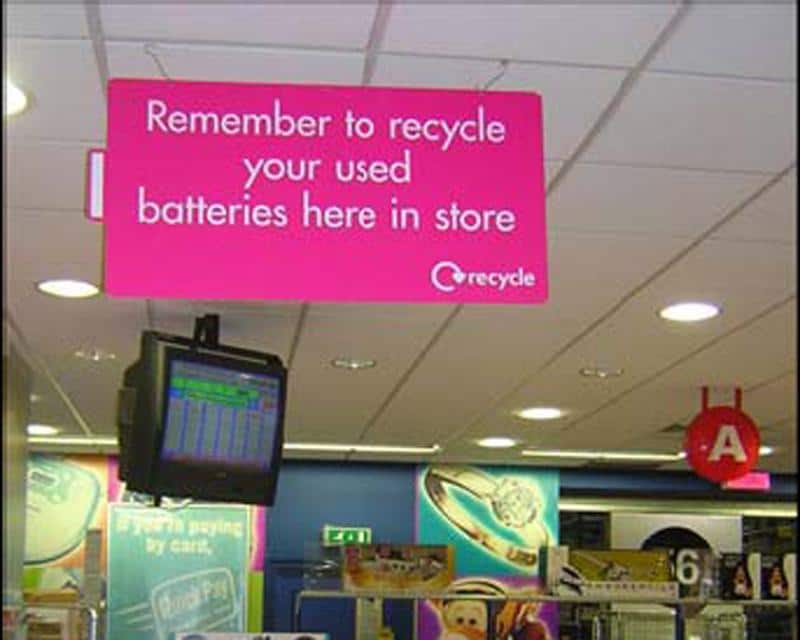
Under the regulations, all retailers selling more than 32 kilograms a year of portable batteries will need to provide free in-store take-back of waste batteries from February 1, 2010.
The batteries will then be collected under arrangements with compliance schemes.
However, the regulations also allow retailers to contact any compliance scheme to arrange a collection, with a 21 day deadline to do so.
There had been concerns raised that this could create logistical difficulties for schemes, but the guidance stresses that the 21-day deadline does not mean schemes must have collected the batteries by this point, they just need to have made arrangements to make the collection.
And, it adds: “Collection should only take place when there is a reasonable amount of waste batteries available from the distributor for collection since the environmental benefits of the collection of such batteries for recycling could be outweighed by the environmental impact of the emissions in coming to collect a very small number of batteries.”
Councils
A similar proviso means that schemes will also be required to take batteries from councils and 'economic operators' (such as waste management companies), however, the guidance stresses that: “This duty does not mean that a BCS has to collect batteries from economic operators or competent public authorities.
“A BCS could, for example, ask the collector to deliver waste batteries to a consolidation point or ABTO. The BCS will need to accept such batteries free of charge,” it adds.
Under the regulations, councils have no responsibility to be involved in the battery collections, but the guidelines state that “we believe that there are potential benefits for BCSs and local authorities if they co-operate on portable batteries collection”.
The results of WRAP's three-year long battery collection trials, which were published in November 2008 (see letsrecycle.com story) suggested council-run kerbside schemes were the most cost-effective way to collect waste portable batteries.
However, the guidance warns that this conclusion “needs to be treated with caution”, explaining that “the report recognises that there will be economies of scale which were not available to the trials”


Register for free to comment