
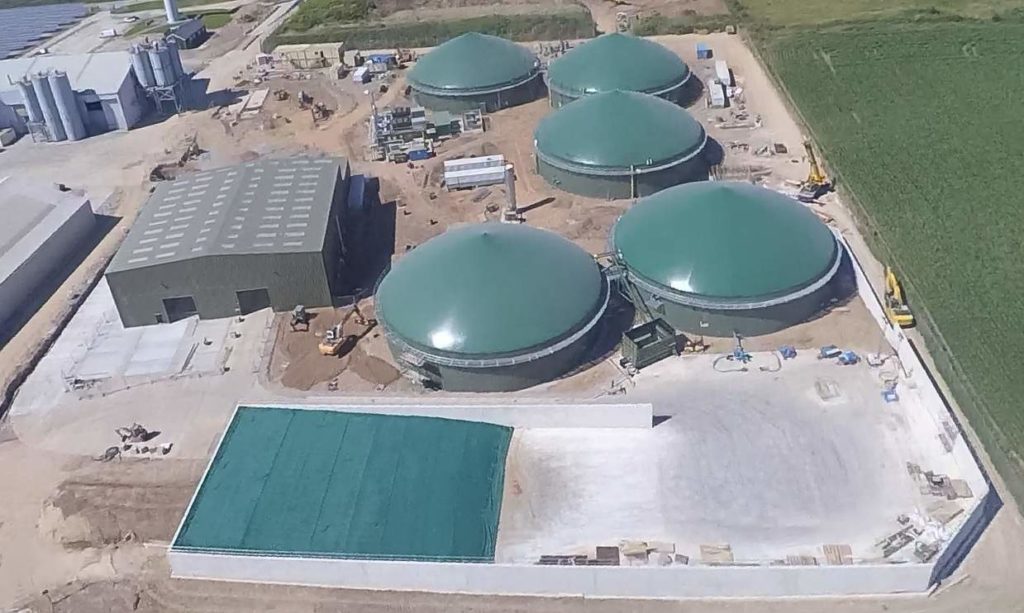
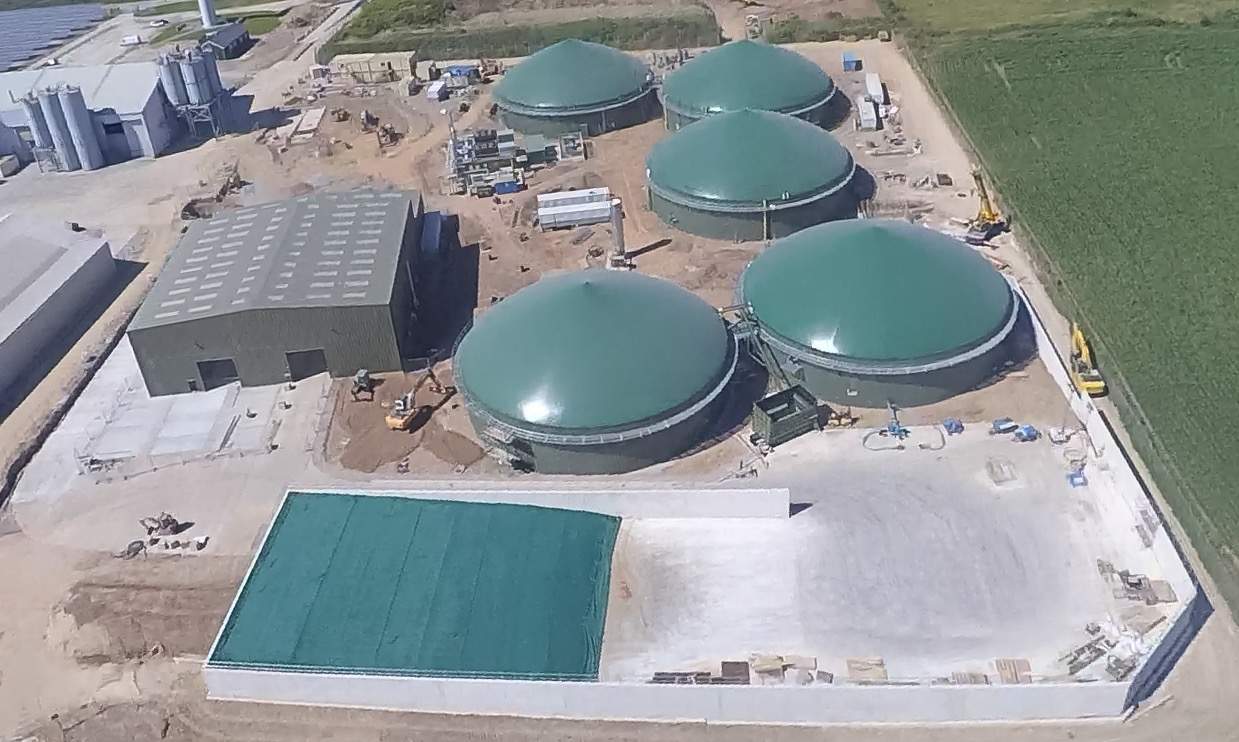
The two new plants, in South Wales and North London, bring the number of Agrivert’s food waste facilities to a total of five. The two plants were built in ‘record time’ of nine months in order to be eligible for the government subsidies.
The facilities will increase Agrivert’s total food waste recycling capacity to 250,000 tonnes per annum and broaden the company’s geographical coverage to span Hertfordshire, London and the South East, Oxfordshire and South Wales.
Using food wastes produced by local householders, food manufacturers and retailers, Agrivert produces a total of 13MW of renewable electricity— enough to power approximately 25,000 local homes.
Alongside the construction of the plants in South Wales and North London, Agrivert also developed a second AD plant for Severn Trent Water— having built Severn Trent’s first food AD facility at Coleshill in 2014.
Feed-in-tariff
Recent changes to government policy on renewable energy tariffs meant that all three facilities were under pressure to complete construction and achieve G59 (first electricity supply to grid) in ‘record time’ in order to secure any feed-in tariff (FIT) subsidies.
In previous years, a business missing the deadline to secure FITs would have suffered a reduction in the amount of tariff that they were eligible to claim. However, the FIT scheme has now effectively come to an end for any plant producing more than 1MW.
The cuts in tariffs have received widespread criticism from the sector, but the Department of Energy & Climate Change (DECC) has defended the move, claiming it will “ensure that only the most efficient installations come forward” (see letsrecycle.com story).
Today, missing the deadline for larger plants means the loss of the right to claim any subsidies, which Agrivert claims makes a plant financially inviable. Instead, the Renewable Heat Incentive (RHI) scheme will cover any new facilities that are built over 1MW in the future.
RHI remains available for gas to grid projects, yet the National Grid provides no guarantees to offtake the gas produced by a plant, thus significantly increasing the level of risk involved and making securing investment far more challenging.
Capacity
Agrivert’s new South Wales and North London facilities, at Bridgend and St Alban’s respectively, will have a capacity of up to 100,000 tonnes of food waste each year, powering 12,000 homes with the electricity produced.
The biofertilisers produced by each plant will be used on the surrounding agricultural land in place of petro-chemical derived fertilisers.
Alexander Maddan, chief executive at Agrivert said, “I am delighted to see us mark our success on this important milestone for the industry and secure the future of our latest AD plants.
“These facilities are likely to be the last of only a handful of food waste AD plants that remain to be built in the UK under the FIT scheme.”
According to Agrivert, both plants will be opening their gates in the coming weeks.

Register for free to comment