


However, some have raised concerns that changes relating to accreditation for paper PRNs have been rushed through and may make it harder in some respects to issue PRNs.
Late last month, (August 25), the Agency wrote to packaging waste reprocessors and exporters to inform them of some key changes being made to the PRN accreditation process for 2016, ahead of the National Packaging Waste Database opening for accreditation applications from August 31.
Accreditation allows reprocessors and exporters of waste packaging to issue packaging waste recovery notes (PRNs) for every tonne of material recycled. The PRNs or export PERNs are sold to packaging producers and producer compliance schemes, who have a legal responsibility to fund the recycling of waste packaging.
In the past, there has been some criticism of the accreditation process as being overly burdensome and putting some reprocessors off registering. To help resolve this, the issue has been the focus of work carried out this year by a Technical Liaison Group comprising members of the Agency and the Government’s Advisory Committee on Packaging (ACP).
As a result, the Agency explained in its August email that it would be introducing a new renewal process for those applying for accreditation whose application is “substantially the same” as for 2015. This would allow operators to effectively go through a tick box exercise rather than be forced to submit a new application year after year.
“The aim of this is to simplify the process where there has been no change to your operations”, the Agency explained.
Welcoming this approach, Simon Ellin, a member of the Technical Liaison Group and chief executive of the Recycling Association, told letsrecycle.com: “What they have done is given us an option of using a tick box for re-accreditation this year, so if nothing has changed from the previous year, you no longer have to go through the long, onerous process of effectively registering from scratch.
“This will make one hell of a difference. We lobbied on this as did the Confederation of Paper Industries (CPI). The tick box is a real step forward and we thank the EA for taking this on board.”
Card
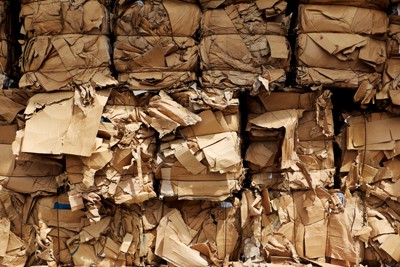
In addition, the Agency announced that for the 2016 accreditation period, it would be introducing new protocols for measuring the percentage of certain grades of paper (KLS and OCC cardboard), aluminium and steel that can be counted as packaging for the purposes of issuing PRNs.
[testimonial id = “280” align=”right”]
At present, companies can claim up to 100% of KLS and OCC as packaging but have to carry out sampling, at their own cost, to determine this. However, under the new plans, companies who process or export cardboard material in conformity to the EN 643 standard for paper grades 1.0.4. and 1.0.5. will be able to claim only 97.5% packaging content without the need for sampling.
There is no change to the amount that can be claimed for mixed paper grades which contain packaging. This remains at 12.5%.
Mr Ellin said there was “broad agreement” in the paper sector for the use of EN 643 as a packaging content guideline.
He commented: “We welcome the use of EN643 – ourselves and the CPI pushed for it.
“Hopefully, although it may take a bit of tweaking going forward, the system of using EN643 will be much easier for our members – indeed we would welcome a fully functioning and understandable protocol involving EN643 for all grades of packaging including mixed paper.”
Looking forward, Mr Ellin said that he hoped the 12.5% packaging assumption for mixed paper could be increased as he believed the packaging content of mixed paper had changed “significantly” over recent years, particularly due to an increase in brown material from online sellers such as Amazon.
He commented: “I would say that now mixed will vary from 12.5% packaging content to 60%. We do appreciate it is too early for the 12.5% to change as the industry requires time to put together a proper procedure to prove that the industry are either using their own sampling procedures or are using those criteria contained in EN643.”
‘Negligible’
However, speaking to letsrecycle.com, one paper industry expert claimed there was some controversy over the paper accreditation changes, suggesting that they had been rushed through and that the 97.5% underestimated the true packaging content of OCC and KLS. He added that the 97.5% should also not be applied to the grade 1.0.4. as it typically contains a large proportion of paper, which is not packaging.
He said: “Many were hoping that the Agency could come up with a system of using EN643 and not deducting 2.5% – we don’t see that as any incentive for operators to become accredited, when the value of the paper PRN is so low, at less than £1.”
Steel and aluminium
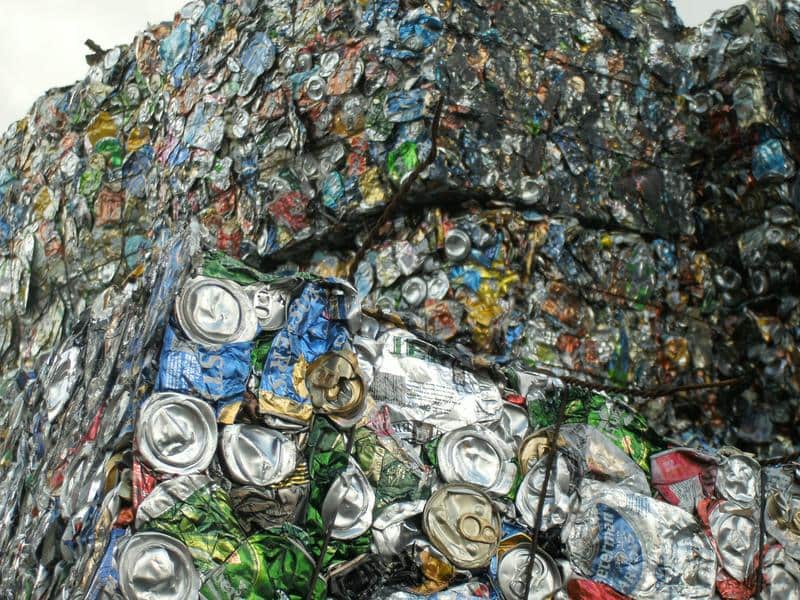
With regards to steel and aluminium cans and associated packaging, the Agency also announced in its August email that for the 2016 period onwards, reprocessors could claim 97.5% packaging content without the need for additional sampling.
Phil Conran, who chairs the ACP and its Technical Liaison Group, explained that the new protocols for paper, steel and aluminium were part of a wider body of work designed to improve the accreditation process and ensure there is a level playing field between reprocessors and exporters.
The ACP had been hoping to define contamination for the purposes of issuing PRNs, but had moved away from this to defining what it was ok to issue PRNs against.
He said: “We are looking for a simple way people can issue PRNs against agreed protocols so they don’t’ have to go through expensive sampling. We would like that applied to all materials. To some extent it is already happening – for instance protocols for steel and aluminium are in place. We are looking at paper meaning that if you follow EN643 you don’t have to do sampling.
“We are in the early days of doing it for plastics and hopefully can come up with a similar system, so that if you are receiving or exporting a material to a certain grade you can then issue X% of PRNs on it without a costly sampling process. At the moment to become accredited you have to have a sampling and inspection plan in place.
“The work is ongoing. We hope it will all be completed for next year.”

Register for free to comment