

The UK recycling industry has been waking up to something of a large post-Christmas holiday ‘recycling hangover’ due to the considerable and continuing trend of ‘over-indulgence’ by the public.
Waste packaging and food leftovers just from the Christmas period cost English councils an estimated £72m[1]. Looking at longer term trends, a recent WRAP report estimates the amount of household food waste arisings in 2015 was 7.3 million tonnes, up by 4.4% from 2012[2]. If you then add in the additional costs incurred by rejected loads due to contamination (which was as high as 338,000 tonnes[3] in 2014 – 2015, a rise of 84%[4]) the costs of waste management are definitely on the up.

If we add to this equation the fact that municipal recycling levels have, not only stagnated, but have started falling and you have the beginnings of a major headache for the industry. Why is this so prevalent in England in particular and what can be done to improve the quality and quantity of recycling?
Contamination
However, amidst all this ‘survival in the face of adversity’ lurks the spectre of contamination and falling recycling rates. The issues are manifold and the industry is rapidly facing a ‘perfect storm’:-
– Communications budgets have been cut resulting in infrequent and inconsistent messaging and as such the public is becoming increasingly confused / disengaged about recycling locally;
– Other cuts mean ancillary support to target people who are ‘getting it wrong’ is no longer available, and the problem is exacerbated;
– Global materials markets are tough and margins tighter so MRF operators are being more discerning about the material they accept and the reprocessors are rejecting increasing numbers of recyclate loads; and
– Industry moves to improve the quality of recyclables (e.g. MRF Code of Practice etc.) have contributed to MRFs tightening acceptance procedures and improving reporting resulting in greater ‘visibility’ of the contamination issue.
The answer we believe, is twofold:
– Increased local effort to improve quality and performance of collections through better (and more targeted) communications and operational service delivery; and
– A national focus on consistency, including, a national campaign to counteract the ‘noise’ from other media outlets.
Improving recycling locally
Locally, councils need to improve the quality of materials collected as well as increasing the quantity – the two are intimately related. Local authorities should consider their performance, revise their policies and operational procedures and engage people, both internally and externally.
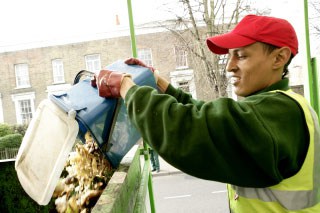
The first step is to gather and review the performance of the service to find out how well it is doing and where the problems are. Part of this process must determine what the issues of recycling rate stagnation and contamination are ‘costing’ in order to build a business case for action. Next, the council’s policies need reviewing and aligning to ensure they support efforts to reduce contamination and improve performance – which may include a harder line being taken on enforcement.
Alongside policies, working procedures, such as dealing with contaminated bins must be followed to help the effort to reduce contamination. Internally, crews may need extra training and heightened motivation, whilst call centre staff must be briefed on key recycling messages and how to respond to calls on contaminated bins etc. Externally, communication and engagement needs to be increased as the public need to know there is an issue, and be supported on ‘how to recycle correctly’ and what happens if they don’t.
Addressing the issue nationally
Nationally the industry, with the help of WRAP, is addressing some of the main issues but the effort needs to go further. Last year WRAP produced the Consistency Framework – a project that started as a collection project but expanded into a supply chain project[5]. The vision for the work is striking:
“By 2025 packaging is designed to be recyclable, where practical and environmentally beneficial, and is labelled clearly to indicate whether it can be recycled or not. Every household in England can recycle a common set of dry recyclable materials and food waste, collected in one of three different ways.”
Whilst there is much more work to be done to test the concept and its detractors won over, it is a valuable framework and shows what can be achieved when the industry (public and private sector) works together to address a common cause. And local authorities can start working with it today by:
– Checking and updating their lists of acceptable and unacceptable materials; and
– Carrying out options appraisals to assess which one of the three service models works for them (as there is a constant ‘churn’ of councils reviewing services due to austerity measures or their contracts expiring this would be relatively easy to do over time).
Public awareness
The other factor that needs to be addressed at national and local levels is the awareness, understanding and motivation of the public.
Recycling is one of those strange things in life that is both very simple and incredibly complicated at the same time. Research published last year[6] [7] [8] [9] indicates there are a lot of underlying reasons for the current public malaise regarding recycling. People say they:
1. Want more transparency on what happens to their recycling/waste;
2. Are frustrated that there are not enough educational materials available on recycling;
3. Are frustrated and confused over knowing what they can actually recycle;
4. Lack confidence about putting different waste in the right bins; and
5. Are confused about which days to put the bins out.
Comfortingly, we’re not alone in this. Canadian research shows many residents fail to recycle cartons because of knowledge gaps. When asked what would help them recycle cartons more often, a strong majority (62%) said ‘having easy-to-identify recycling information would help them with their efforts’[10]. Furthermore, recent US research by the Institute of Scrap Recycling Industries suggests 44% of the adult population ‘must rely on their own devices to figure out what can and cannot be recycled, information about the recycling process and other details about recycling’[11]. Like the UK, whilst there are high performing areas, contamination and stagnating recycling rates are now becoming a serious concern in the USA. In the city of Chicago, participation in recycling has been falling and recycling rates have suffered as a result, noting a 2% drop in 2016[12]. Whilst in Texas, the new recycling programme for the city of McAllen saw high levels of contamination with about 300 people ‘in violation’ since its launch in November 2016[13].
Closer to home, in Wales and Scotland, the story is different, in no small part due to the ambitious resource management strategies and initiatives that are in place at all levels of government. The Welsh Assembly published its Collections Blueprint in 2011[14] and has the Collaborative Change Programme which provides direct advice and financial support to their local authorities. As a result, Wales is the only part of the UK to meet the EU’s 50 per cent recycling target, four years ahead of the 2020 deadline. Scotland’s approach is similar with a Household Recycling Charter (developed in collaboration with Scottish local authorities) designed to support Making Things Last, Scotland’s circular economy strategy[15].
As in Wales, there is a package of support measures, such as funding for councils adopting the charter, national communications campaigns, mandatory food waste collections in many areas and bans on landfilling recyclable materials. Which clearly has helped drive change and maintain the momentum, far better than has been the case in England.
England
As for England, things are looking a bit of a mess, but one thing is clear though, whatever the industry does, we will have to do it for ourselves because the (English) government is not going to help out anytime soon! But against all the odds, a significant resource management sector has managed to develop which contributes at least £6.8 billion to the UK economy, and as much as £41 billion, if activities like repair, reuse and leasing are included[16]. As an industry we have to work more closely together to make recycling work. And we can work together to address the big and the small stuff. First of all, we have the Consistency Framework and, over in the Midlands, Warwick District Council and MetalMatters, the industry-funded communications campaign, have increased kerbside recycling of metal packaging by 28% in just six months thanks to a dedicated promotional campaign[17]. This is just one example of what can be achieved by industry working together to focus efforts on actively addressing the big recycling issues and we hope it’s a sign of greater things to come….
References
[1] www.green-alliance.org.uk/christmas_waste_costs_council.php
[2] Household Food Waste in the UK, 2015, WRAP, January 2017
[3] www.express.co.uk/news/uk/703586/recycling-landfill-bin-rubbish-council-contaminated
[4] www.bbc.co.uk/news/uk-37159581
[5] www.wrap.org.uk/content/consistency
[6] UK Recycling Index 2016, Viridor
[7] Where Does the Recycling Go? Resource Association; Are We Getting the Message?
[8] Serco Environmental Services and Future Thinking
[9] Resource Association, End Destinations of Recycling Charter
[10] http://resource-recycling.com/node/8061
[11] www.plasticsnews.com/article/20170103/NEWS/170109991/survey-half-of-americans-lack-information-on-recycling
[12] http://chicagotonight.wttw.com/2016/12/06/recycling-rates-drop-chicago-officials-look-reeducate-public
[13] www.krgv.com/story/33971359/mcallen-residents-noncompliant-with-recycling-program-will-be-penalized
[14] Towards zero waste: a new waste strategy for Wales, Welsh Assembly Government, 2011
[15] Making things last: a circular economy strategy for Scotland, The Scottish Government, Natural Scotland, 2016
[16] Recycling reset How England can stop subsidising waste, Jonny Hazell and Jasper Keech, Green Alliance, January 2017
[17] http://www.ciwm-journal.co.uk/warwick-sees-28-metal-packaging-increase-6-months/
The Authors

Subscribe for free