

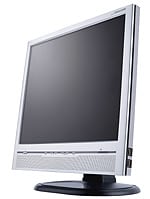
Academics at the University of York have developed technology they believe offers a “clean, efficient way to recover the mixture of liquid crystals from waste LCD devices”.
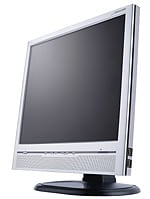 Sales of LCD televisions are expected to more than double in the next three years |
With popularity for flatscreen televisions booming and consumer prices falling, the number of LCD televisions sold to the public is expected to more than double by 2009. As well as high-tech television sets, LCDs are found in all kinds of electronic gadgets, from pocket calculators to mobile phones.
But the academics said there is currently “no viable recovery techniques and no fully safe disposal options” for LCDs.
The DTI-backed Resource Efficiency Knowledge Transfer Network is providing 50% of the funding needed to help turn the University of York's techniques into a commercial reality.
Consortium
The project comes as a consortium also including companies C-Tech Innovation Ltd, aXr Ltd, NIS Ltd, Active Disassembly Research, Glass Technology Services Ltd, Botanix Ltd, Engelhard Sales Ltd and Sims Group UK Ltd.
Welcoming the research, the Science and Innovation Minister, Lord Sainsbury, said: “This research initiative provides a real opportunity to harness the world class expertise that we possess in the UK and direct it towards the task of wealth creation.
“By providing a focus for collaboration and delivery, this partnership will help establish British industry as the world leader in this area,” Lord Sainsbury added.
Hazardous
Although research carried out for Defra has suggested LCDs are unlikely to be considered “hazardous” for the purposes of handling at council recycling centres (see letsrecycle.com story), the University of York said they do contain materials that are potentially hazardous to reprocessing staff.
LCD screens are usually made of two glass sheets with a thin film of liquid crystal material sandwiched between. This liquid crystal material is a mixture of between 15 and 20 different compounds.
| Related links: |
Commenting on the project, Dr Avtar Matharu of the Department of Chemistry at York said: “The amount of LCD waste is increasing at an alarming rate and, with disposal in landfill or incineration no longer acceptable, new solutions were needed.
“We have developed a technology that offers a clean, efficient way to recover the mixture of liquid crystals from waste LCD devices. Once recovered, the liquid crystal mixture will be recycled in to different LCDs or the mixture will be separated into individual components for re-sale,” Dr Matharu said.

Register for free to comment