


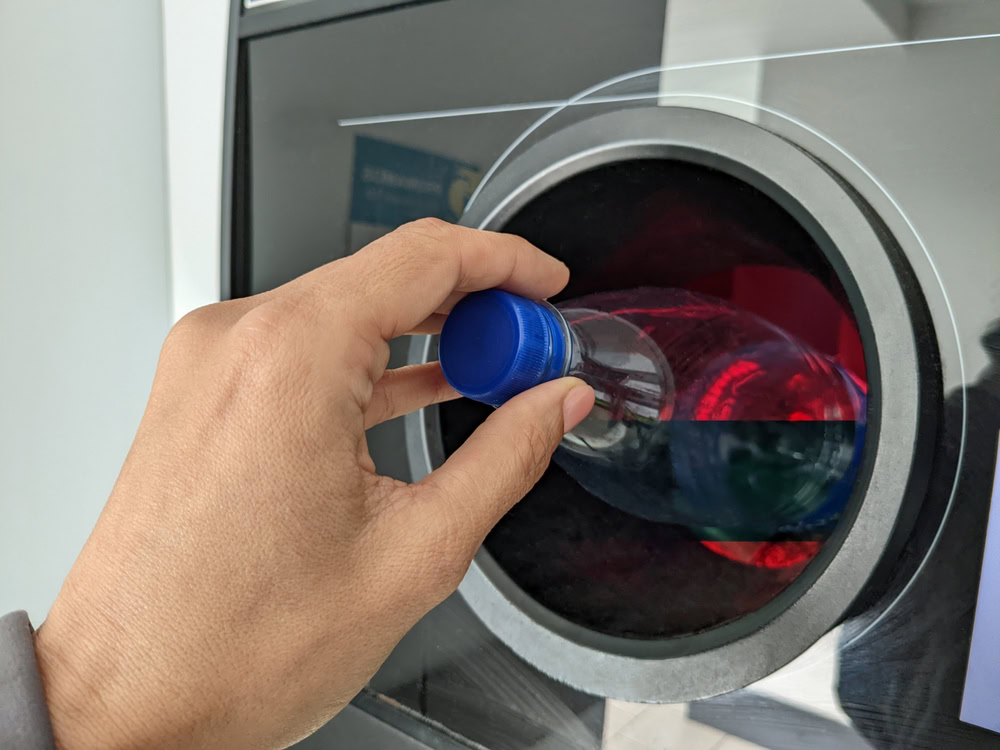
Under the regulations, retailers located in urban areas with a retail space of less than 100m² will be automatically exempt from operating a return point.
These businesses will not need to apply for an exemption, although they will retain the option to host a return point voluntarily.
The management organisation stated: “The DRS is designed to ensure a comprehensive and accessible network of return points across the UK.
“At the same time, we recognise that a uniform approach would place disproportionate burdens on some retailers without necessarily enhancing scheme accessibility or improving return rates.
“The exemptions framework is therefore intended to balance accessibility for consumers with operational practicality for businesses.”
Additional RVM exemptions
Alongside this automatic exemption, Exchange for Change is developing additional criteria that would allow other retailers to apply for exemptions.
The proposed conditions are expected to take into account proximity to alternative return points and the practical feasibility of hosting an RVM, including physical space and store layout constraints, health and safety or hygiene risks, building or heritage restrictions, and limitations to utilities.
It is anticipated that urban retailers with a sales area between 100m² and 199m², as well as rural retailers under 200m², will be able to apply for exemptions on the basis of such physical or operational limitations.
Any exemption granted would require approval from Exchange for Change and would depend on adequate local provision of return points being maintained.
£6k grants for smaller retailers
Exchange for Change has also confirmed plans to introduce financial support for retailers that are still required to host return points.
The grants will be targeted specifically at small, independent retailers where an RVM is deemed the most appropriate solution based on expected return volumes.
The proposed grant level is £6,000 per site, distributed over three years as annual payments of £2,000.
To support this initiative, Exchange for Change plans to allocate a total of £60 million over the first three years of DRS.
This funding will be provided in addition to the Return Handling Fee.
The DMO explained: “The grant is intended to support retailers with the initial capital outlay of RVM installation, improve the viability of participation for smaller retailers, and help ensure a well-distributed and effective return point network.”
Ed Woodall, Chief Executive of the Association of Convenience Stores (ACS), added: “It is essential that local shops are not penalised for hosting return points, so we welcome the introduction of grants for the smallest retailers and a more proportionate approach to exemptions.
“Retailers need clarity on the net costs of the scheme to be able to make a decision on how they take part.
“If grants and handling fees are not set at the right level, the scheme risks failing not just the retailers expected to deliver it, but the communities they serve, by undermining convenient access for consumers to recycle containers and redeem deposits.”
Find out more about the policy and regulation updates, technology and infrastructure, and consumer engaging ahead of the introduction of the scheme at the Deposit Return Scheme Conference on 30 April 2026 in London.

Register for free to comment