


Consumption-based emissions are calculated by allocating emissions to the final consumers in each country, and can illuminate the emissions associated with goods and services throughout their supply chain.
This takes a wider view than usual emissions calucations by “including the emissions embodied in the goods and services” that are imported into London and consumed.
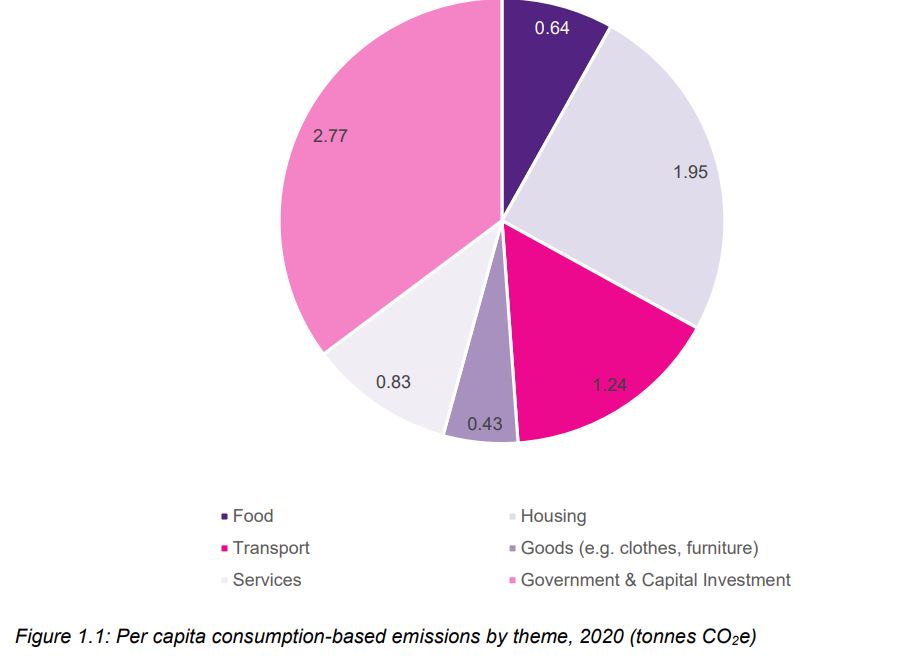
The report found that average consumption-based emissions per capita have fallen by 49% to 5.1 tonnes per year between 2001 in 2020.
The decrease is partly accredited to the 2008 financial crisis and the “decarbonisation of the UK electricity sector”. However, there is still “much more work to do” if the capital is to reach net-zero, the report added.
Drivers
The biggest drivers of emissions for Londoners are transport, housing (including emissions embedded in buildings’ materials) and food, though these are lower than the UK average. However, the emissions associated with services in London, such as restaurants and hotels, are higher than the UK average.
Wayne Hubbard, chief executive of ReLondon, said: “This report highlights the progress London is making in reducing its consumption-based emissions, giving insight into where attention needs to be focused. But we all know that more needs to be done, and more urgently, if we’re to help to prevent catastrophic global heating. ReLondon works with London boroughs and businesses to build more circular infrastructure, services and products in the city, and we also engage with London’s citizens to help them reduce emissions linked to the consumption of stuff – and this report clearly shows that we need to build on those efforts if we want to achieve a low carbon circular economy here in the capital.
Differences
The difference between the lowest and the highest London borough in terms of emissions “is significant”, the report said. the lowest emitting borough was Newham at 6.31 tonnes of CO2, while the City of London recorded 9.64 tonnes CO2e
The report states that the reduction of consumption-based emissions is positive, but reduction is not coming fast enough to meet the target by 2030.
Mayor Philip Glanville, London councils executive lead for climate, transport and environment, said: “Even though London’s population has increased drastically since 2001, there has been a huge amount of effort from boroughs to support Londoners in reducing their household consumption-based emissions, as highlighted in today’s report. However, there is still much more to do in order to reduce harmful emissions across London.”

Register for free to comment