

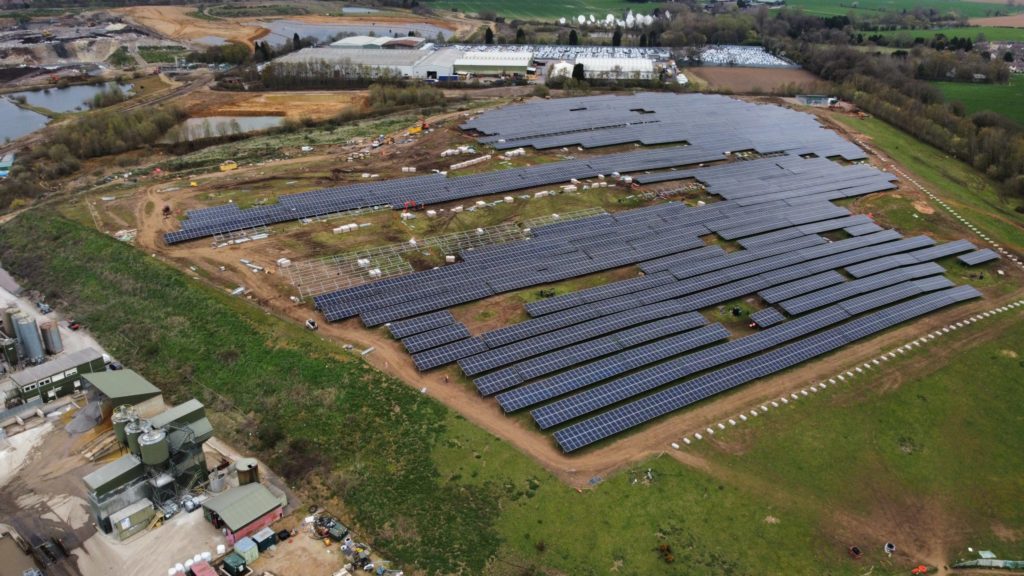
Working alongside specialist partners REG Power Management and Ethical Power, Veolia is looking to utilise its landfill sites better and add value, particularly in regard to ‘green energy’ generation, as part of its landfill restoration programme.
The programme began in 2017 (see letsrecycle.com story). The first three former landfill sites managed by Veolia for which the company was granted planning permission to install solar panels were Netley in Hampshire, Ling Hall in Warwickshire, and Ockendon in Essex.
Veolia UK tweeted on 12 April: “Installation of solar panels continues across our sites in the UK as we advance our drive into renewable energy and carbon net zero.”
Installation of solar panels continues across our sites in the UK as we advance our drive into renewable energy and carbon net zero #sustainable #greenenergy pic.twitter.com/NOAfQzp2qE
— Veolia UK (@VeoliaUK) April 12, 2021
It is thought to be easier for landfill sites to provide solar power to the National Grid than it would be for many other facilities because they may already have a connection, generating electricity from turbines powered by landfill gas. Connecting to the National Grid can be costly without an existing link.
Landfill
Veolia says it operates six landfill sites for the disposal of hazardous and non-hazardous wastes across the UK.
In a statement of accounts published in September 2020, Veolia ES Landfill Ltd said it processed 2.6 million tonnes of waste in 2019. This was down from 2.9 million tonnes in 2018.
According to the accounts, there were two site closures in 2019, one “in the London region” and one in the Midlands. The accounts add there were increased inputs in some of the landfills in the London region due to shutdowns outside the UK and a decline in soil inputs. This was said to result from uncertainty around Brexit reducing some construction activities.
Landfill gas generated across Veolia’s sites in 2019 is said to have amounted to 390,884 MWh, down from 411,734 MWh in 2018. The company says the amount of gas generated at its sites is slowly declining, mainly in line with site closures, though changes to the types of waste going into landfill will also have an impact.
On 2 January 2019, Veolia ES Landfill acquired Lancashire-based hazardous landfill group Whitemoss Landfill Holdings and its wholly owned subsidiary Whitemoss Landfill for nearly £16 million, the accounts say. They add that £1.8 million of this was deferred “due to certain financial thresholds being met” and was paid shortly after the year-end.

Subscribe for free