

Under the agreement, Andigestion will be the sole contractor for the collection and processing of food waste for all six district council areas in Gloucestershire.
The contract is thought to be valued at approximately £15.7 million over the course of the eight years.
Andigiestion was first awarded a five-year contract with the council in October 2014, with the option to extend its term for a further two years.
With the current contract set to expire in September this year, the new contract will commence in October, and run until September 2029, with the option to continue for a further two years.
Mike Lowe, operations director at Andigestion said: “We’re delighted that we will be working with the county council to recycle the county’s food waste; not only is anaerobic digestion a much more sustainable practice than sending it to landfill, but it has the added benefit of creating renewable energy for use in our homes.”
Bishop’s Cleeve
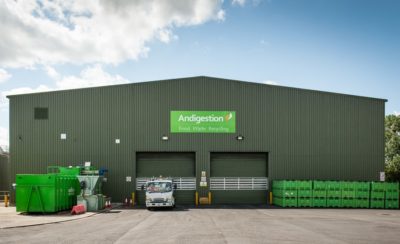
The food waste will be collected from the kerbside and taken to Andigestion’s Bishop’s Cleeve site, which has the capacity to recycle 34,000 tonnes of household and commercial food waste per year.
Once at the site, the waste will be treated by anaerobic digestion (AD), and generate 31,000,000 kWh of energy a year.
“Anaerobic digestion is the best way to treat Gloucestershire’s food waste”
Food waste will firstly be separated from any packaging and anaerobic bacteria will digest the waste under strict temperature conditions.
The remaining ‘digestate’ will then used by local farmers as a “sustainable alternative” to carbon-intensive chemical fertilisers.
Cllr Nigel Moor, cabinet member for environment and planning at Gloucestershire county council said: “Anaerobic digestion is the best way to treat Gloucestershire’s food waste , turning food scraps into green gas and electricity, and bio-fertiliser. It’s a crucial part of our work to manage Gloucestershire’s waste safely and cleanly, whilst cutting carbon emissions.”


Register for free to comment