

This was the message given to delegates at yesterday’s (3 December 2015) Anaerobic Digestion and Bioresources Association (ABDA) national conference, held at One Great George Street, London.
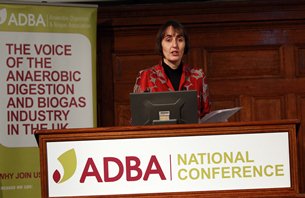
Other topics covered during the conference included potential areas for growth and development within the sector.
Opportunity
Addressing delegates, Charlotte Morton, ABDA’s chief executive, outlined opportunities for the AD industry identified in the Association’s latest market report. “There has been a particularly rapid surge in on-farm AD recently, with plant numbers almost tripling to 158 over the past two years. With the right support that trend is set to continue, especially with the recognition of AD’s significant role in decarbonising farming”.
“However, the key question is whether the new government’s policies will support AD’s continued growth,” said Ms Morton.
In addition to market analysis, the conference looked at ongoing action including ABDA’s work with circular economy charity WRAP and bioeconomy consultants NNFCC to measure the amount of feedstock being used by the sector, which is aimed at demonstrating the contribution the sector is making to meet recycling and climate change targets.
Government cuts
ABDA’s strategic advisor, the former Energy Secretary Chris Huhne, and Green Alliance senior policy advisor, Amy Mount, discussed how the Conservative government’s focus on reducing direct subsidies to renewable energy technologies will affect the UK’s ability to meet climate change, renewable heat and transport targets launched by the Department of Energy and Climate Change’s (DECC) in November.
Mr Huhne said that renewable industry had been hit hard by the ‘tax grab’ from renewables in the July 2015 budget, which took one third out of renewable budgets (around £2.3 billion).
“However, the Renewable Heat Incentive (RHI) does offer some hope for growth in AD. So at least there’s one application in terms of heat where you do appear to have a runway for development,” he added. RHI spending is forecast to increase to £1.15 billion by 2020/21.
Food waste collection
The issue behind food waste collections and the implications for the AD sector was also on the agenda for the day. A keynote panel discussed the impact of Scotland’s waste regulations, the Welsh government’s ‘Towards Zero Waste’ strategy and Northern Ireland’s Food Waste Regulations as well as what could be done to stimulate collections in England.
Ray Georgeson, chief executive of the Resource Association said that England should follow suit with some of its neighbours and seek to address the 55% of English households that do not currently have a food waste collection. With regards to bringing in a mandatory service, he said: “industry can lead, but government must respond if action is going to take place”.

Dr Richard Swannell, director of sustainable food systems at WRAP, said that there is untapped opportunity for the AD sector in the 7 million tonnes of household food waste going to landfill.
“The key thing here is firstly making sure that that figure goes down and following this, we need to make the best possible use out of the waste we do save and AD is a good way of dealing with this,” said Mr Swannell.
WRAP is currently leading a Food Waste Recycling Action Plan to develop recommendations for increasing the capture of food waste. A report should be published in March 2016.
Finally Bill Griffiths, national organics manager for Viridor, looked at the practicalities of food waste collection, highlighting the importance of feedstock quality and a need to inspire households to take part.
“AD contributes to the Circular Economy and this is a key message to get households contributing,” he concluded.


Register for free to comment