

Between September and November 2015, the majority of residents in the south Wales borough will have their 240-litre black wheeled bin replaced with a 140-litre purple-lidded bin, as part of the authority’s effort to reduce the amount of residual waste that it produces.

Torfaen currently recycles 52% of its waste and needs to increase this to 58% in 2015/16, and 70% by 2025 to meet Welsh Government targets. The council faces a fine of around £100,000 for every 1% it falls below these targets.
Moves to slim down the borough’s residual waste capacity were approved by councillors in October 2014, following a consultation with residents outlining three proposed options aimed at reducing the amount of residual waste generated and boosting recycling (see letsrecycle.com story).
Torfaen residents voted overwhelmingly in favour of maintaining the existing fortnightly residual waste collection service, but replacing the container from a 240-litre with a 140-litre wheeled bin – dubbed ‘skinny bins’ by the local authority.
Consultation
Options which were rejected by residents included keeping the existing 240 litre capacity wheeled bins, but reducing collection frequency from fortnightly to four-weekly, or switching from a wheeled-bin system to a collection regime involving bags.
Other recyclables – including plastics, glass, metals and cartons – are collected in a black box on a weekly basis, as well as a weekly collection for food waste. Torfaen does not plan to change recycling collections when it rolls out the new service.
According to the authority the cost of the new bins and delivery was originally estimated to be around £750,000, however, the council has worked to keep costs to under £500,000.
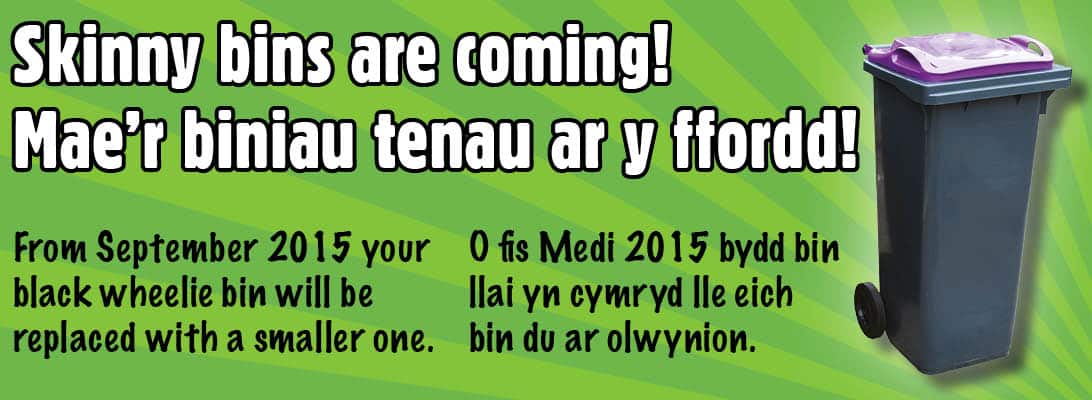
Torfaen is carrying out a series of road shows throughout August to promote the changes, as well as a two Facebook Q&A sessions.
Speaking after the new system was approved in October, councillor John Cunningham, Torfaen’s executive member for neighbourhoods, said: “The public have told us that of the three options we consulted on, smaller bins, collected fortnightly, are their preferred option. While this doesn’t represent the most cost efficient option for the council, councillors have listened to what the public has to say.
“We are confident that under this new system we will meet our recycling targets and avoid the huge fines that we are faced with if we don’t.”


Register for free to comment