


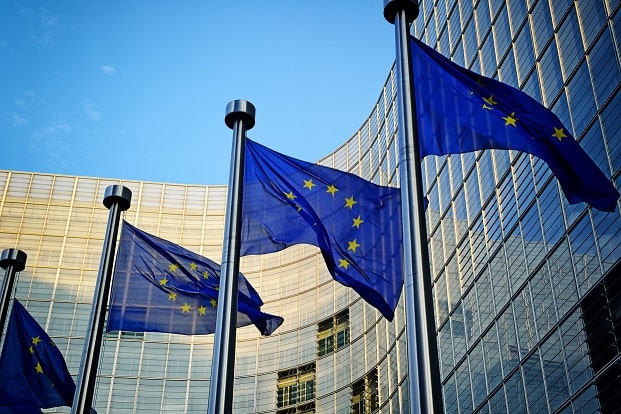
The report, approved by the MEP’s own Environment Committee and chaired by Finland MEP Sirpa Pietikainen, calls for future EU circular economy legislation to include binding municipal, industrial and commercial waste reduction targets to be achieved by 2025, as well as 70% recycling and 80% packaging recycling targets for 2030. It will be voted on next week at a full meeting of the European Parliament on July 8 and if approved will be sent to the European Commission for consideration.
The report has a number of similarities to the contents of the circular economy package published by the former EU Environment Commissioner Janez Potocnik last year – the new EU proposals, due out later this year, are known as “circular economy package 2”.
Pay-as-you-throw
The Environment Committee proposal also calls for future legislation to include a ‘pay-as-you-throw-principle’ for residual waste combined with mandatory separate collection schemes for paper, metal, plastic and glass, as well as a mandatory separate collection for biowaste by 2020.
Other suggestions in the document include harmonised Member State waste collection methods, strictly limiting incineration to non-recyclable waste, and extended producer responsibility and market incentives for the uptake of reuse and recycled materials.
The document will go to MEP’s with the support of a number of committees. Having already met the approval of the European Parliament’s environment committee last month (see letsrecycle.com story), it has also been endorsed by committees on: industry, research and energy; and employment and social affairs.

If approved by MEPs, the report will act as an indication of the Parliament’s wishlist for circular economy proposals set to be tabled by the European Commission later this year.
Fears
However, there are fears among several environmental groups that elements of the report could be watered down or rejected completely by MEPs during the plenary next week, with the vote already postponed by a day to July 8 and a request tabled for a split vote, which would mean provisions in the report voted on separately rather than on the document as a whole.
Specifically, some of the more controversial elements of the report are thought to include proposals for recycling targets as well as proposed legally-binding lead and sub-indicators for targets to increase resource efficiency at EU level by 30% by 2030 compared with 2014 levels.
Indeed, last week, a letter from the European Engineering Industry Association (Orgalime) called on MEPs to reject the report as it “lacks realism” and is “characterised by the old fashioned approach of command and control legislation on products, coupled with multiple layers of administrative burden and costs measured against doubtful environmental effectiveness on the ground”.
Ambition
As a result, a separate letter was sent to MEPs earlier this week (July 3) signed by “organisations representing progressive business and environmental NGOs”, which urges the European Parliament to vote in support of maintaining the level of ambition in the document.
Signatories of the letter include: UK business and politics organisation the Aldersgate Group; the European Environmental Bureau (EEB), which represents more than 140 environmental organisations; and Dutch sustainable business association De Groene Zaak.
The letter calls on MEPs to “help create the conditions for a new ambitious, effective and evidence based circular economy package”, adding that a more resource efficient economy could create up to two million jobs and a reduction in greenhouse gas emissions of 2% to 4% annually.
It states: “Moving to a more resource efficient economy is a major opportunity for the EU that must not be missed. Producers and the business community have a tremendous role to play, with an increasing number of companies recognising the business case for improved resource efficiency as a way of giving their businesses and the EU as a whole a unique competitive advantage.”


Register for free to comment