

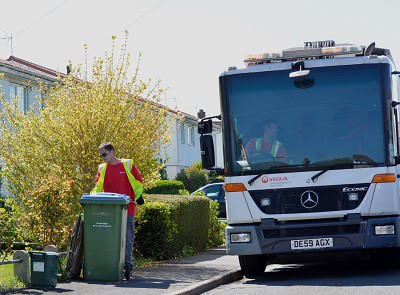
Mergers and acquisitions have been steadily on the rise since 2012 with 2014 experiencing a particularly strong finish to the year, the report claims.
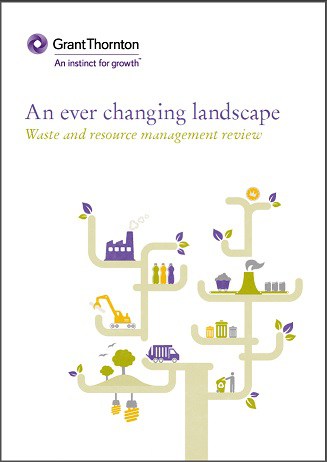
The final quarter of the year saw 15 deals completed and M&A activity has almost reached 2011 levels, it adds. This increased consolidation is the industry’s reaction to the difficult trading conditions according to the report ‘An ever changing landscape: waste and resource management review’.
The report noted the “surprising result of the Conservatives winning the election with a majority” adding that their manifesto was “pretty silent in terms of waste policy”. This hasn’t helped give the sector direction or certainty, the report claims.
The withdrawal of the European circular economy package was seen as a disappointment, which further took away momentum from the sector. In enthusiastic preparation for the package, for example, Scotland experienced an increase of 9% in available feedstock and a 13% increase in employment across AD.
Another issue highlighted, permeating almost every challenge facing the industry, is the decline in material prices. The report itself states that they “do not make great reading”. Glass, plastic, paper, ferrous metals, are down with the exception of a small rise in the PRN price of aluminium.
MRFs
Among the contributors, Paul Levett, director at Waste Transition, highlights the difficulties faced by some MRFs who negotiated their gate fees some four or five years ago when material prices were high. He said these MRFs have been “severely” impacted by the falls in their income due to material price declines. Mr Levett also notes that the challenges created by low material prices have been increased by contamination levels.
He added that the fall in oil prices and difficulties in obtaining enough feedstock in competition with the export market, has made plastics recycling very difficult. However, he predicts an increase in “less mature areas of recycling” such as glass colour sorting, and WEEE.
Fiona Ross, from law firm Pinsent Masons, who also contributes to the report, takes this point further. She says there has been too much focus on the “obvious materials” and “the recovery of more valuable materials such as waste chemicals, lubricating oils and other industrial by-products is also likely to take centre-stage.”
However, she also predicts a ban on thermal treatment for separately collected recyclables.
Markets
Some contributors questioned whether the lines of the waste hierarchy are becoming “blurred” and whether a more “market driven approach” is needed. This is particularly the case if the sector needs to grow without many government incentives or subsidies.
Kristian Dales, FCC Environment Sales and Marketing Director, argues that energy recovery could be used as a “buffer” in times when recycling isn’t financially worthwhile. He argues: “The problems currently experienced by the sector are due to our attempts to push waste up the hierarchy too fast, too soon.”
Derek Rooney from SLR lamented the fact that it perhaps may take “real” resource scarcity rather than the prospect of it to boost investment in recycling infrastructure.
Rooney called for a “much more ambitious” approach where resources are treated similarly to renewables, with Government incentives to support the market and boost confidence among investors.
Landfill bans could help keep resources in a closed loop but this would still need to be backed up by a strong UK recycling sector to avoid losing this material to Europe, he argued.
Rooney added that it was likely that the manufacturing sector would play the larger role in delivering a circular economy. This was due to the fact that essential components needed for a closed loop economy involved design for disassembly, repair and remanufacturing – all of which would be controlled and managed by individual brands.

Register for free to comment