

Definitions of household and non-household WEEE were amended in October after the UK’s classification of household and business WEEE were found to be at odds with that held by the European Commission (see letsrecycle.com story).
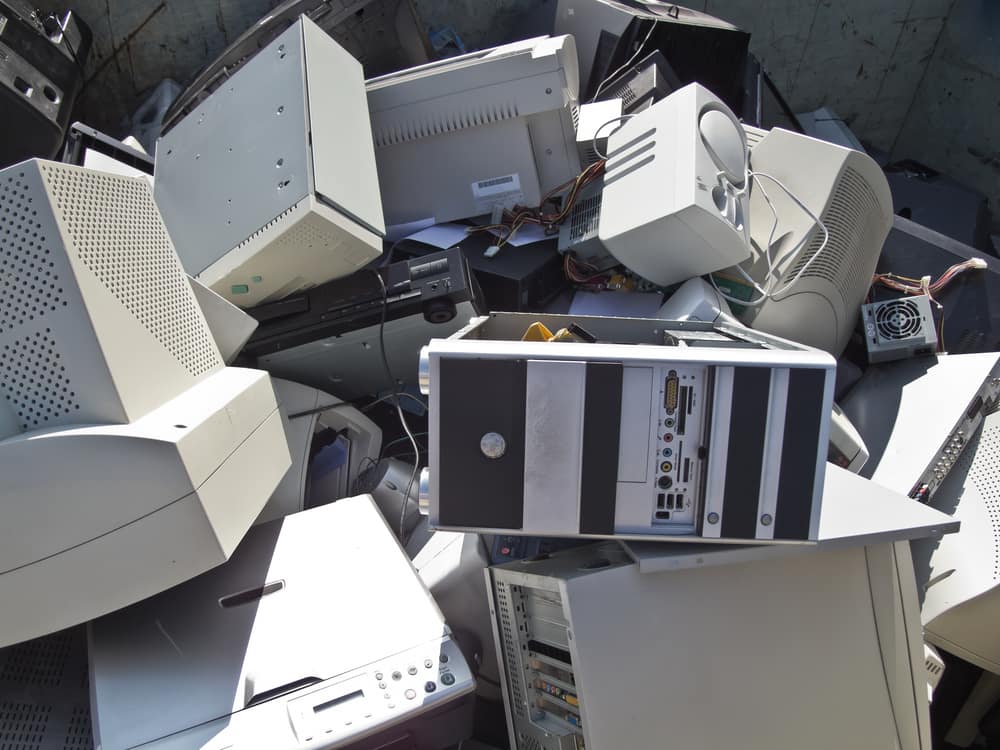
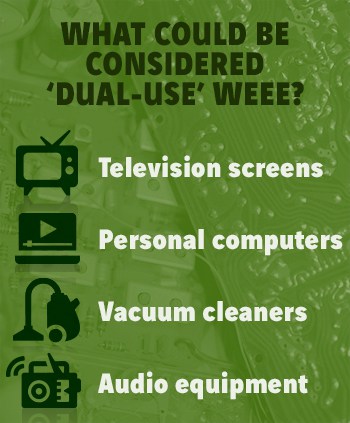
The difference centred on the interpretation of ‘dual use’ WEEE, which includes items such as PCs or television screens, which could conceivably be used in business or by consumers. In the UK, the definition was also qualified by the quantity of WEEE being presented for collection.
The new definition is in line with that held by the European Commission and states that any WEEE of a similar nature to that presented to householders, regardless of how much is presented, should be classed as household WEEE.
Guidance published by the Department for Business, Innovation and Skills (BIS) this morning outlines the extent to which producers of new electronic goods must apply the new definition stating that: “Within each category producers, PCSs and treatment operators must assess and report whether the material is household (B2C) or non-household (B2B).”
Design
The guidance states that producers should consider the product’s design, specification and function to decide whether the product is specifically designed for household or non-household use. Products designed for both household and non-household use must then be classified as B2C.
BIS adds that products which might be purchased by consumers, by are designed and intended for commercial use should be classed as B2B.
 Advice is also offered to operators of WEEE treatment facilities in how to assess WEEE received for reprocessing. According to BIS, all WEEE received from local authority run designated collection facilities (DCFs) must be classed as B2C.
Treatment facility operators are also advised that they must decide in conjunction with the compliance scheme providing the material how it should be classified when it is collected from other routes.
BIS has suggested that the new ruling could be good news for operators of designated collection facilities (DCFs) and local authorities collecting business WEEE, as they would be able to allow a greater proportion of these to be financed by producers.
But, for some producers this is likely to result in greater costs for compliance with the WEEE Regulations, as they will be required to finance a greater proportion of the costs associated with meeting the household WEEE targets.


Register for free to comment