


The list, which was published by the EA earlier this week following the May 31 deadline for prospective schemes to submit their applications, sees REPIC's parent company, RESC Ltd, WEEE schemes DHL and Econo-Weee, and reverse logistics company CCR UK throw their hats into the ring.
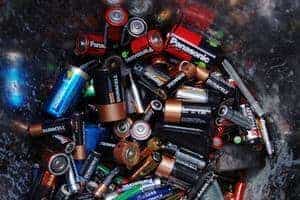
If all eight schemes receive approval, it would be significantly above the three or four which had been envisaged by many in the sector, and – with the costs of getting a scheme off the ground above £130,000 – could offer a somewhat unexpected cash windfall for the Agency.
The full list of prospective schemes who have applied to the Environment Agency is:
• Budget Pack – the WEEE and packaging compliance scheme has dubbed its prospective scheme the 'cube initiative' (see letsrecycle.com story)
• BatteryBack – a joint undertaking between Leeds-based WEEE compliance scheme WasteCare and waste management company Veolia (see letrsrecycle.com story)
• CCR REBAT – parent company CCR UK is part of the German-based CCR reverse logistics group
• DHL Battery Compliance – the express and logistics company already operates WEEE and packaging compliance schemes
• eBatt – part of RESC Ltd, alongside WEEE producer compliance scheme REPIC
• Econo-Batt – a joint-venture between WEEE compliance scheme Econo-Weee, Hampshire-based waste battery collection company Loddon Recycling and French battery recycler Citron SA
• ERP UK Ltd – to be run alongside the identically-named UK arm of pan-European WEEE compliance scheme ERP
• Valpak – to be run as part of the UK's largest compliance scheme, which already offers WEEE and packaging compliance services (see letsrecycle.com story)
The prospective schemes will now find out by June 30 whether the Environment Agency requires additional information to consider their application, which they must then submit by August 31.
The EA will then issue its decision on which schemes have been approved on September 30.
Econo-Batt
Speaking to letsrecycle.com this morning about the Econo-Batt scheme, director John Kerr claimed that his scheme would be able to offer a per battery cost to producers of 0.1 pence per battery, or just 10% of the penny per battery he said had been mooted by other prospective schemes.
He explained that this was just to the scheme having “low overheads”, “cutting out the middle-man” and not having a larger parent company involved, adding “there's no-one between us and Loddon and no-one between us and Citron”.
“We have got the software, we have got the infrastructure in place to run a scheme, we have got 400 members in place as Econo-Weee,” he said.
Mr Kerr also claimed that the scheme had the potential to offer a cost per battery even below the 0.1 pence level, based on a collection and treatment cost of £400 per tonne.
“If we get members putting 20,000 tonnes on the market, our 2010 obligations would be 2,000 tonnes, with 43,000 batteries in a tonne, that would be 0.002 pence per battery,” he said.
And, he stressed the benefits that working with Citron, which has a battery recycling facility in Le Havre and already works with Loddon Recycling (see letsrecycle.com story), could offer, explaining that “Citron has the infrastructure in place to recycling the UK's whole recycling targets in 2016”.
DHL
Meanwhile, Paul James, the DHL scheme's general manager, told letsrecycle.com that: “The DHL scheme will focus on ensuring cost effective compliance.”
He explained that the scheme would aim to use DHL's “key skills”, with “lots of small collections” and “using the strengths DHL has through its existing activities”
Among these, he highlighted its strong relationships with local authorities and the role it already plays in importing batteries into the country.
CCR REBAT is expected to release details of its scheme next week, while a representative of eBatt said that, with the application in progress, they could not comment until things were “firmed up”.

Register for free to comment