

Plans for two waste gasification facilities in England have taken major steps forward.
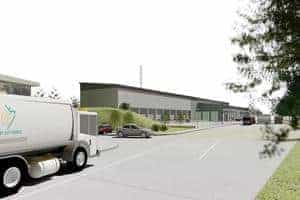
The Planning Inspectorate has given the go-ahead to Resource Recovery Solutions (Derbyshire) a subsidiary of Shanks, to build a 133 million mechanical biological treatment (MBT) and gasification plant in Sinfin Lane, Derby. The inspectorate overturned a previous decision by Derby city council to refuse planning permission for the plant in a ruling on Friday (September 21).
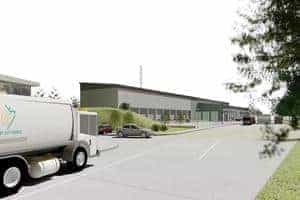
And,an application for funding fora fluidised bed gasification facility in Hull has passed its first hurdle. The Energy Works facility is being proposed by Humberside engineering company the Spencer Group.
RRS
In Derby, Resource Recovery Solutions (RRS) is proposing the MBT and gasification facility to treat residual waste under its 27-year contract with Derby city and Derbyshire county councils, which was signed in December 2009 but is yet to reach financial close.
The facility is being developed in partnership with services company Interserve to extract recyclable materials from residual waste to produce solid recovered fuel, which will then be fed into the gasifier where it will be turned into a gas for combustion. The gasification technology is being supplied by Energos.
The 190,000 tonnes-a-year capacity plant represents a key component in the councils strategy for diverting waste from landfill but has been plagued by planning delays.
Derby city council refused permission for the plant in 2009, but, following a 10-day inquiry held in June 2012, the facility and education centre has been given the go-ahead.
Councillor John Allsop, Derbyshire county councils cabinet member for technology and recycling, said: We are obviously delighted with the result.
Landfill is bad for the environment and expensive for tax-payers with 12.8 million in landfill tax currently being paid by the city and county council each year. Well be meeting with RRS and Derby City shortly to discuss progressing the plans.
‘Delighted’
The decision was also welcomed by Shanks managing director Ian Goodfellow, who saidit would enable RRS to move towards financial close on the 400 million council contract.
He said: We are delighted to have received planning permission for the Sinfin Road plant and to move towards financial close with Derbyshire county council and Derby city councils. We firmly believe our proposed solution is the most sustainable and cost effective way to divert the councils residents residual waste from landfill, contribute to increasing the regions recycling and recovery rates, and generate significant amounts of clean energy.
We very much look forward to working with the councils and local residents to make this a reality.
However, local campaign group, Sinfin, Spondon and All Against Incineration (SSAIN), hit out at the decision.
Simon Bacon, SSAIN chairman, said: The granting of this proposal by Inspector Robinson of the UK planning inspectorate flies in the face of the governments so called localism agenda. Localism – the ability for local people to mould the community around them is promoted by the UK government as the future for this country.
Mr Bacon added that incineration was a symptom of the countrys failure to recycle and said that it was a fantasy that burning biowaste was carbon-neutral.
Hull
.jpg)
In Hull, meanwhile, the European Commission has ruled that if a 20 million grant is awarded by the UK Government to Spencer Group to build its Energy Works facility,this will be in line with EU state aid rules aimed at ensuring fair competition.
The company has applied for the 20 million grant from the European Regional Development Fund, which supports economic regeneration in member states.
Spencer Group secured planning permission to build the 100 million Energy Works facility on a 12-acre site on the east bank of the River Hull in October 2011. The facility is being proposed to treat different kinds of waste using fluidised bed gasification, anaerobic digestion and in-vessel composting technology.
The grant now hinges on major project approval by the European Commission, which is required for grant-supported projects with a capital cost of more than 50 million Euros. A decision on the application is expected in weeks.
Charlie Spencer, Spencer Group chief executive, said: We are pleased that the European Commission has recognised the environmental and other benefits of the advanced technologies within Energy Works and that this development can pave the way for similar green energy projects in the UK and Europe.
Spencer Group is now moving forward with detailed implementation plans and hopes to close other deals to fund the development.
It is expected that, if developed, the plant will be eligible for the ROCs level for advanced conversion technologies, which currently stands at 2 ROCS per MWh.

Register for free to comment