

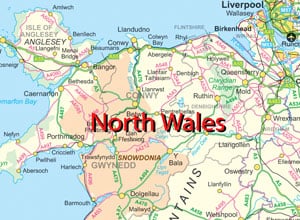
A partnership of five North Wales councils has formally begun the procurement of a long-term residual waste treatment and disposal contract which is expected to be worth up to £800 million over 25 years.

In the contract notice, the NWRWTP state that the contract would be worth between £600 million and £800 million and, on top of the 25-year contract, would include a five-year build period for facilities and also an option to extend the contract by a further five years.
The local authorities that form the Partnership are Flintshire county council, which is leading the project, Conwy county borough council, Denbighshire county council, Gwynedd council and the Isle of Anglesey county council.
Outlining the need for the project, Stephen Penny, project manager of NWRWTP, told letsrecycle.com: “Obviously a lot of county councils are predominantly rural, if you look at places like Anglesey, Gwynedd and Conwy, and in terms of the project and in terms of total tonnage, it is not that big.
“But, it is very important for two main reasons, one – because they are predominantly isolated in terms of their rural locations, there is not a lot of opportunities around them and, secondly, landfill is running out in Wales and there is only about five years left.”
Government
The project is being developed with £142.7 million in Welsh Assembly Government (WAG) funding, which was officially confirmed by the government last week, and is set to be delivered in the form of a £5.72 million subsidy each year over the service period of the contract.
Mr Penny added that the intention of the project was in-keeping with the WAG's plans to reduce waste to landfill to 5% by 2025 under its ‘Towards Zero Waste Strategy' (see letsrecycle.com story).
“We know very well that the WAG has its very, very ambitious targets in its strategy about achieving a 70% recycling rate and reducing waste to landfill to 5% and that will require waste treatment facilities being developed, such as this,” said Mr Penny.
Technology
In the Outline Business Case it submitted to the WAG in order to receive financial support for delivery of the contract, the NWRWTP used energy-from-waste with combined heat and power as its reference technology for the project. However, the contract notice states the Partnership is technology neutral.
Alongside designing, building, finance and/or operation of “waste treatment facilities”, the council partnership will also look for the successful bidder to deliver a number of waste transfer stations, as well as merchant waste treatment facilities and merchant waste treatment capacity.
The procurement does not include the provision of waste and recycling collections or delivery, but the NWRWTP did state that it is “flexible” on this issue.
The partnership envisions between three and 10 bidders coming forward for the contract, with a time limit for requests for documents set for August 2 2010 and a deadline for expressions of interest set as September 29 2010.
Other major waste projects being developed in Wales include the £1.1 billion five council partnership Prosiect Gwyrrd, which is set to develop large-scale waste management infrastructure in the south of the country (see letrecycle.com story).


Register for free to comment