

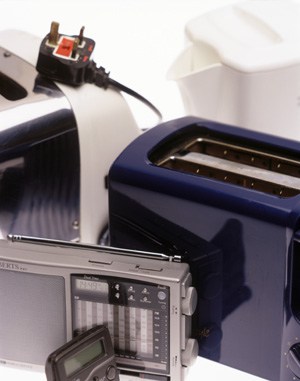
The consultation was launched in April with the aim of increasing the “efficiency and effectiveness” of the Directive without causing “unnecessary” costs to businesses, consumers and the public sector (see letsrecycle.com story).

And it also claimed that the room for interpretation over producer responsibility from country to country within the original EU WEEE Directive had meant that, when the system was implemented in the UK, a less-than-perfect situation had occurred.
It said: “LARAC supports the assertion that the built-in flexibility of the legislation when subsumed into UK law has lead to a sub-optimal contribution to the improvement of the environmental performance of operators and systems as regards organisational responsibilities (collection – take-back and treatment), financial responsibilities, products (labelling and eco-design) and information (to treatment operators, consumers and authorities including reporting and registration).”
The UK is currently expected to collect 4 kilograms of WEEE per head of population, and LARAC advocates maintaining the current situation of calculating a fixed mandatory target using a weight per inhabitant per year method.
Costs
While stating that the idea of increasing general WEEE collection targets has “significant merit”, LARAC expressed concern about the additional costs that this could put on local authorities who operate Designated Collection Facilities (DCF), as well as the effect it could have on other areas of their operations.
It explained that it would be worried if “the number of categories or the quantities of waste collected at DCFs increased to expose its members to additional costs.”
“Given the amount of space at many LARAC members' DCFs are limited, collecting additional quantities and/or categories could cause a crowding out of other reuse and recycling facility,” it added.
However, LARAC does offer a solution to the need to increase DCF capacity, albeit one that would place responsibility on producers as part of strengthened producer compliance legislation.
It states that it would support this strengthening to promote “more financial support for local authorities to provide expanded and enhanced DCFs”.
At the same time it supports strengthening the legislation as a means of promoting in-store take-back and more detailed in-store information and area-specific labelling on WEEE reuse and recycling.
Reuse
LARAC's response also emphasises the importance of reuse above recycling, encouraging “obligatory access” for reuse organisations to collected WEEE to allow them select any equipment that can be reused, repaired or refurbished.
And it also informs their support of eco-design, stating that LARAC “supports the proposal to stimulate eco-design through defining targets for reusability, recyclability and recoverability”.
WEEE-Pin
Reuse is also a key factor according to the consultation response from the WEEE Public Interest Network, WEEE-Pin, a body formed by the Association of Cities and Regions for Recycling and Sustainable Resource Management (ACR+).
It calls for the introduction of WEEE reuse targets for producers, as well as “standard quality criteria for reused WEEE”.
With regards to producer responsibility, it calls for a more harmonised Europe-wide approach to be taken to implementing their financial responsibilities under the Directive, “starting from the moment the consumer discards WEEE.”
The response also raises the issue of producers' operations, calling for “measures to guarantee transparency and accessibility on the operation of producers' compliance schemes – details on fund raising and treatment channels”.
It differs from LARAC's view on one area in particular – calling for a variable mandatory collection target for each country, based on the amount of EEE put on the market in previous years, rather than a fixed, per head of population, target.
Explaining its reasoning, it states that “a fixed mandatory collection target does not necessarily reflect the amount of the WEEE effectively generated every year and it creates unnecessary burden and unequal situation for Member States to meet a fixed mandatory target.
“The reason is that the weight of certain products shows a great variation: a good example is an average fridge, which weights about 60 kg in Norway, but only 29 kg in Slovakia,” it adds. “This fact certainly has impact on the collected WEEE amount and thus fulfilling the target requirements expressed in weight.”
In the original consultation document, the EU had indicated that it hoped to introduce new mandatory national targets for WEEE collection by December 31 2008.


Register for free to comment