

The Climate Change Bill, which will give legal powers for the trials to be run, is continuing its journey through Parliament with further scrutiny in the House of Lords scheduled for Wednesday (January 23).
This week, waste and recycling minister Joan Ruddock said her Department for Environment, Food and Rural Affairs was already dealing with enquiries from councils ahead of the selection process.
At least 14 local authorities have already enquired about running household trials.
The minister said: “My Department is currently considering the appropriate process for waste collection authorities to express an interest in running a pilot waste incentive scheme. Timings for this process will be subject to parliamentary progress on the Climate Change Bill. In the mean time, we continue to encourage and welcome authorities making enquiries on the implications of the legislation.”
Mrs Ruddock was detailing the latest situation in response to a string of parliamentary questions submitted by Tory MP Eric Pickles.
Council Tax
Councils are already using small-scale incentives to boost recycling – often in the form of prize draws. The latest to do so is Warwick, which has launched a recycling “lottery” this week working with Warwickshire county council.
The key differences for the incentive trials to be launched by Defra – and the reason that the trials must be included within the Climate Change Bill – is that they will be linked to the Council Tax, affect many more households and include a charging element.
The systems will involve householders who recycle more than the average being given some form of rebate through their Council Tax. Those who recycle less than average could find they receive an additional charge on their Council Tax.
Defra is insisting that the amount of money charged from residents must be given out to other residents as a reward – councils will not be able to raise funds through the incentives schemes.
Commenting on the level of charges, Mrs Ruddock said: “No maximum charge has been set, although the government retain a reserved power to create a cap on the level of incentive in the future, should this be necessary.
No maximum charge has been set, although the government retain a reserved power to create a cap on the level of incentive.
Joan Ruddock
“Since local authorities will not be able to keep any revenue which they collect through pilot schemes, they have no incentive to raise the level of the payments beyond what will encourage positive behaviour. Experience in other countries where incentive schemes are in operation also suggests that payments do not need to be high to be effective. For example, variable charges in the region of £30 to £50 have been shown to drive behaviour change overseas,” she said.
Administration
Modelling by the three Defra officials working on the incentive schemes has suggested that overall, incentive schemes will save councils £18 per household because of the expected reduction in household waste put out for disposal.
Defra believes this saving will ultimately mean incentive schemes will not add to local authority burdens financially, despite the increased administration they will require.
The five pilot schemes will have access to a £1.5 million pot to cover administration costs, but Defra hopes the pilots will show other councils that savings of around £18 per household can be made through such schemes, meaning that a national roll-out of the schemes will not require central government funding for administration costs.
Ministers have also been keen for any council running incentive schemes to take account of disadvantaged householders. Responding to one of Mr Pickles' questions, Mrs Ruddock said this week: “It will be the responsibility of each local authority to decide whether individuals receiving Council Tax benefit (or any other groups) should be treated differently under a waste incentive scheme and, if so, how. My Department will work with stakeholders to develop guidance on this.”
Warwick
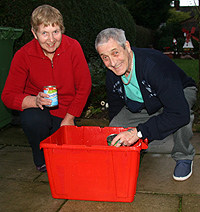
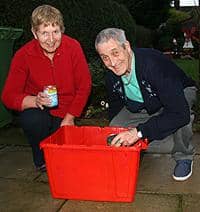
Warwick district council has decided an incentive scheme is what it needs to boost participation in its red box kerbside recycling scheme, since only 52% of households are currently taking part.
After discovering the low participation rate in a survey late last year, the district is teaming up with the county council to offer £50 cash prizes in a lottery of households that take part in the weekly collections of cans, glass and paper.
Under the “Red Box Lottery” initiative, residents have to put out their recyclables for collection by 8am on their normal collection day and make sure it is filled. Although collections only cover cans, glass and paper, Warwick is soon planning to collect plastic and cardboard as well.
Cllr Martin Heatley, Warwickshire County Council's Portfolio Holder for the Environment, said: “The Red Box Lottery is an exciting new way to get people using their boxes and putting items out for recycling. By simply putting out the red box with items for collection you could win £50.
“Hopefully we will see even more people starting to use their red boxes to help us push up those recycling figures and divert waste away from landfill,” he added.
The red box lottery will take place throughout January, February, March and April this year, with the district council hopeful it will help raise the 29% household waste recycling rate it achieved in 2006/07.


Register for free to comment