



Bioaerosols risk guidance published by AFOR
The guidance – entitled ‘Guidance on the Evaluations for Bioaerosol Risk Assessments for Composting Facilities' – was produced by AFOR in partnership with the Environment Agency in a bid to make the monitoring of bioaerosols more consistent across open windrow sites (see letsrecycle.com story).
In the introduction, the document states: “While the focus is on Environment Agency staff, this document will also assist those completing the risk assessments, as it will provide an understanding of what the Environment Agency expects to be included in bioaerosol risk assessments.”
Premier Waste launches bike reuse scheme

Since December 2008, the company has been working with Newcastle charity Recyke y' Bike, South Shields social enterprise Sports Recycler and Bike-It, a scheme run by Your Homes Newcastle, to recover unwanted bikes. Old models, frames and wheels can now be handed in at the Monument Park MRF where Premier will store them ready to be collected by the bike recycling schemes. More than 300 unwanted bikes have been handed in to the scheme since it began, with the bikes going to help families both within the North-East and as far away as Africa.
Tony Hitchens, head of marketing at Premier said: “The new drop-off point at Monument Park makes it easier for people in Washington and Sunderland to donate their unwanted bikes. Recycling schemes such as this prevent reusable items such as unwanted bikes from going to landfill or being sold as scrap metal.”
New houses too small for recycling, according to study
New homes are too small for everyday chores such as recycling, research by a government architecture and design body has claimed.
The Commission for Architecture and Built Environment (CABE) conducted the research with the owners of 2,500 private new homes, to explore views on the adequacy of internal space and found that, alongside issues such as privacy and room to prepare food, 72% claimed there was not enough room to house three receptacles for recycling. The research also pointed to lower-income households suffering from more of the problems associated with a lack of space.
Richard Simmons, CABE chief executive, said that the research brought into question the argument that the market would meet the demands of people living in private housing developments. He said: “We need local planning authorities to ensure much higher space standards before giving developments the go-ahead.”
Environmental award for Greater Manchester HWRCs
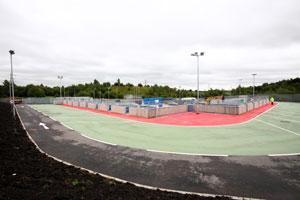
The award was given to Viridor Laing (Greater Manchester) and its subcontractor Viridor Waste (Greater Manchester), which was awarded the multi-billion pound contract in April to deliver waste management and recycling infrastructure to the Greater Manchester area over the next 25 years. The standard focuses on identifying the potential impact an organisation could have on the environment, with Viridor Laing demonstrating that it has developed systems and control measures to manage any potential impacts.
Earlier this month, all 36 facilities under the Greater Manchester PFI deal received planning permission and the authority revealed that it has been able to begin on-site work and was maintaining its construction programme, which aims to have all the developments completed by 2012 (see letsrecycle.com story).
BIR issues survey on recycling carbon savings
The Bureau of International Recycling has issued a detailed report which estimates the carbon emissions reductions that can be made through recycling metals and paper.
The study, which is available here, is based on research conducted by Imperial College, London, in October 2008, and considers the carbon savings that can be made by using recovered and not raw sources in relation to aluminium, copper, ferrous metals, lead, nickel, tin, zinc and paper. It concludes that, using published literature data, the total emissions savings for the production of all seven materials by using 100,000 tonnes of secondary and not primary materials is 500 metric tonnes of CO2 per annum.
Commenting on the research, project leader Roger Brewster, of Metals Interests Ltd, said: “It is hoped that this report will be used by industry to assess their own situation in terms of secondary metal production and, perhaps, to provide information that can be independently verified to permit further more accurate calculations of carbon dioxide savings in specific cases.”


Register for free to comment